


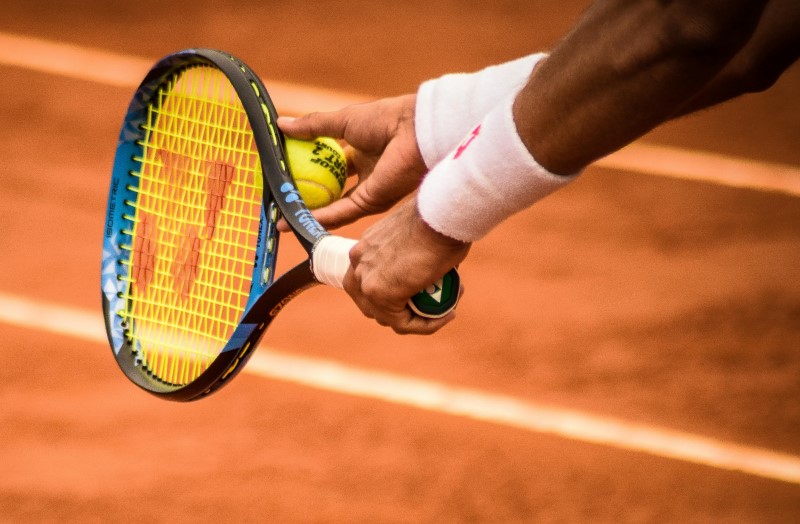
Tennis hitting is one of the most important aspects that define a player’s performance. It’s not just about striking the ball with the racket; it’s a precise combination of technique, power, coordination, and tactics that allows players to control the game and gain an advantage over their opponents.
From historic champions to modern professionals, the ability to execute precise and powerful shots has been a key factor for success. Every stroke, whether it’s a fast cross-court forehand, a slice backhand, or an overhead smash, requires specific technical and tactical skills honed through years of practice and competition.
In this article, we’ll explore tennis hitting in depth: its phases, types of shots, common mistakes, and how biomechanical technology can help you elevate your game.
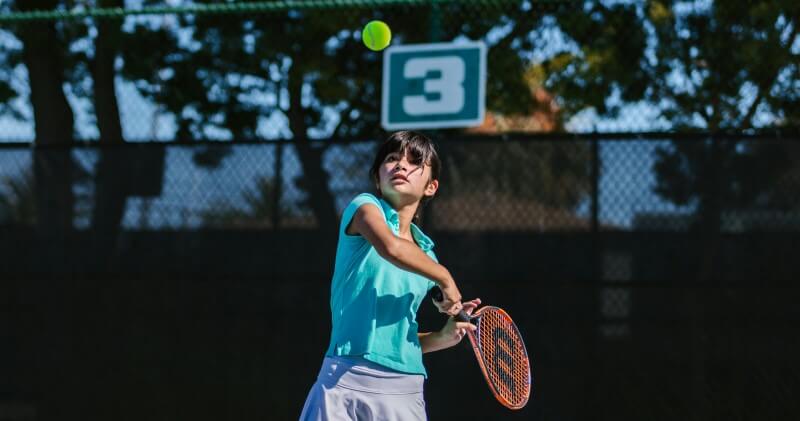
Phases of hitting in tennis
Understanding these phases and mastering them is essential to improve the technique and consistency in the tennis player’s game. Next, we will describe the main phases of hitting in tennis:
1. Preparation
The preparation phase begins before the ball reaches the player. Key elements include:
- Proper positioning on the court.
- Adjusting the grip according to the type of shot.
- Visualizing the intended stroke.
Players must also anticipate the ball’s trajectory and quickly decide how to respond, whether with an attacking or defensive shot.
2. Approach
Once the ball is coming toward the player, the approach phase begins, moving to the optimal position to hit the ball. Speed and direction depend on the type of shot and the ball’s location on the court.
A correct approach ensures the player has enough time for final adjustments.
3. Positioning and Shot Adjustment
Before the swing, small adjustments are made in:
- Lateral or forward-backward positioning.
- Distance to the ball.
- Body and racket angles.
These adjustments are crucial for executing an effective shot.
4. Swing
The swing phase is the actual hitting movement. Key points:
- Controlled, fluid motion of the racket.
- Using the correct part of the racket.
- Applying proper technique for power and accuracy.
- Maintaining balance and posture.
5. Ball Contact
The moment of contact is critical. The aim is to strike the ball precisely to achieve the desired effect:
- Controlled speed and direction.
- Spin variations such as topspin or slice.
- Strategic placement on the opponent’s side.
6. Follow-through
After contact, the stroke is completed with a proper follow-through:
- Continuing the racket’s forward and upward movement.
- Maintaining balance.
- Preparing immediately for the next shot.
Mastering these phases ensures effective, consistent strokes. Constant practice and attention to technical details improve precision, power, and control.
Types of Tennis Hitting
Tennis requires a variety of shots depending on the situation. Mastery of each type is crucial for a complete game.
1. Forehand
The forehand is one of the most important basic strokes. Executed with the dominant arm extended forward, it drives the ball to the opposite side of the court.
Purpose:
- Maintain pressure on the opponent.
- Control game tempo.
- Create attacking or defensive angles.
2. Backhand
The backhand is performed by crossing the non-dominant arm in front of the body. Variants:
- One-handed backhand: greater reach, elegant stroke, requires advanced technique.
- Two-handed backhand: more control and stability, ideal for younger or less strong players.
Used for both defense and counterattacks.
3. Serve
The serve starts every point, aiming to gain an advantage immediately. Types include:
- Flat serve: maximum speed, minimal spin.
- Topspin serve: high trajectory, reliable bounce.
- Slice serve: lateral curve, harder to return.
Requires coordination, precision, and power.
4. Volley
The volley is executed near the net before the ball bounces. Features:
- Short, fast stroke.
- Allows control of the net.
- Finishes points efficiently.
Essential for aggressive net play.
5. Smash
The smash is a powerful overhead shot, typically in response to a lob. Features:
- Downward trajectory with force.
- Finishes points decisively.
- Combines power, technique, and positioning.
Types of Tennis Hitting
Tennis requires a variety of shots depending on the situation. Mastery of each type is crucial for a complete game.
1. Forehand
The forehand is one of the most important basic strokes. Executed with the dominant arm extended forward, it drives the ball to the opposite side of the court.
Purpose:
- Maintain pressure on the opponent.
- Control game tempo.
- Create attacking or defensive angles.
2. Backhand
The backhand is performed by crossing the non-dominant arm in front of the body. Variants:
- One-handed backhand: greater reach, elegant stroke, requires advanced technique.
- Two-handed backhand: more control and stability, ideal for younger or less strong players.
Used for both defense and counterattacks.
3. Serve
The serve starts every point, aiming to gain an advantage immediately. Types include:
- Flat serve: maximum speed, minimal spin.
- Topspin serve: high trajectory, reliable bounce.
- Slice serve: lateral curve, harder to return.
Requires coordination, precision, and power.
4. Volley
The volley is executed near the net before the ball bounces. Features:
- Short, fast stroke.
- Allows control of the net.
- Finishes points efficiently.
Essential for aggressive net play.
5. Smash
The smash is a powerful overhead shot, typically in response to a lob. Features:
- Downward trajectory with force.
- Finishes points decisively.
- Combines power, technique, and positioning.
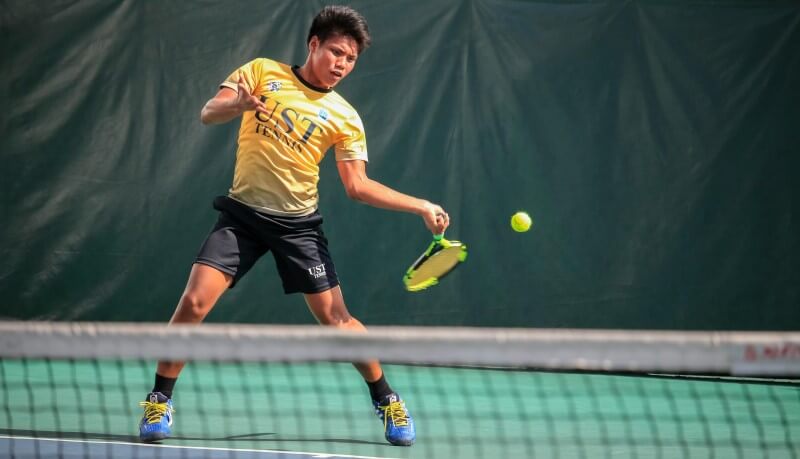
Common Tennis Hitting Mistakes
Even experienced players make frequent errors that affect performance:
- Poor preparation, reducing precision.
- Incorrect positioning relative to the ball.
- Swing too rigid or rushed.
- Incomplete follow-through, decreasing power and control.
Identifying and correcting these mistakes enhances consistency and effectiveness.
Improving Hitting with Biomechanical Technology
Tennis biomechanics allows players to analyze every phase of hitting and optimize technique:
- 3D motion capture: measures posture, swing speed, and angle.
- Racket sensors: track power, precision, and consistency.
- Feedback software: provides actionable data to refine technique and prevent injuries.
At STT Systems, we provide biomechanical solutions designed specifically for tennis. Professional players, coaches, and enthusiasts benefit from technology that improves performance and perfects every stroke.
Tips to Improve Tennis Hitting
- Practice each phase of hitting separately before integrating them into full strokes.
- Use video or motion capture to analyze and correct mistakes.
- Alternate between different shots: forehand, backhand, slice, topspin.
- Strengthen key muscles: shoulders, arms, core, and legs.
- Train hand-eye coordination for better precision.
Comparison Table: Shots and Main Objectives
| Shot | Main Objective | Key Technique |
|---|---|---|
| Forehand | Control and attack | Wide swing, firm wrist |
| Backhand | Defense and counterattack | Two-handed: stability; One-handed: reach |
| Serve | Start point with advantage | Precision, power, variation |
| Volley | Net control, finish points | Quick stroke, firm wrist |
| Smash | Finish point, maximum power | Downward motion, coordination |
Mastering tennis hitting involves more than power and speed. It requires understanding each phase, knowing the different types of shots, and applying strategies based on biomechanics and court tactics. Technique, analysis, and consistent practice are the keys to elevate your game.
Discover our solutions for tennis swing analysis
SEE MOREAt STT Systems, we help players and coaches perfect every movement, from preparation to follow-through, with motion capture and biomechanical analysis solutions that transform the way you train and compete. Contact us today to discover how our technology can take your tennis performance to the next level.