


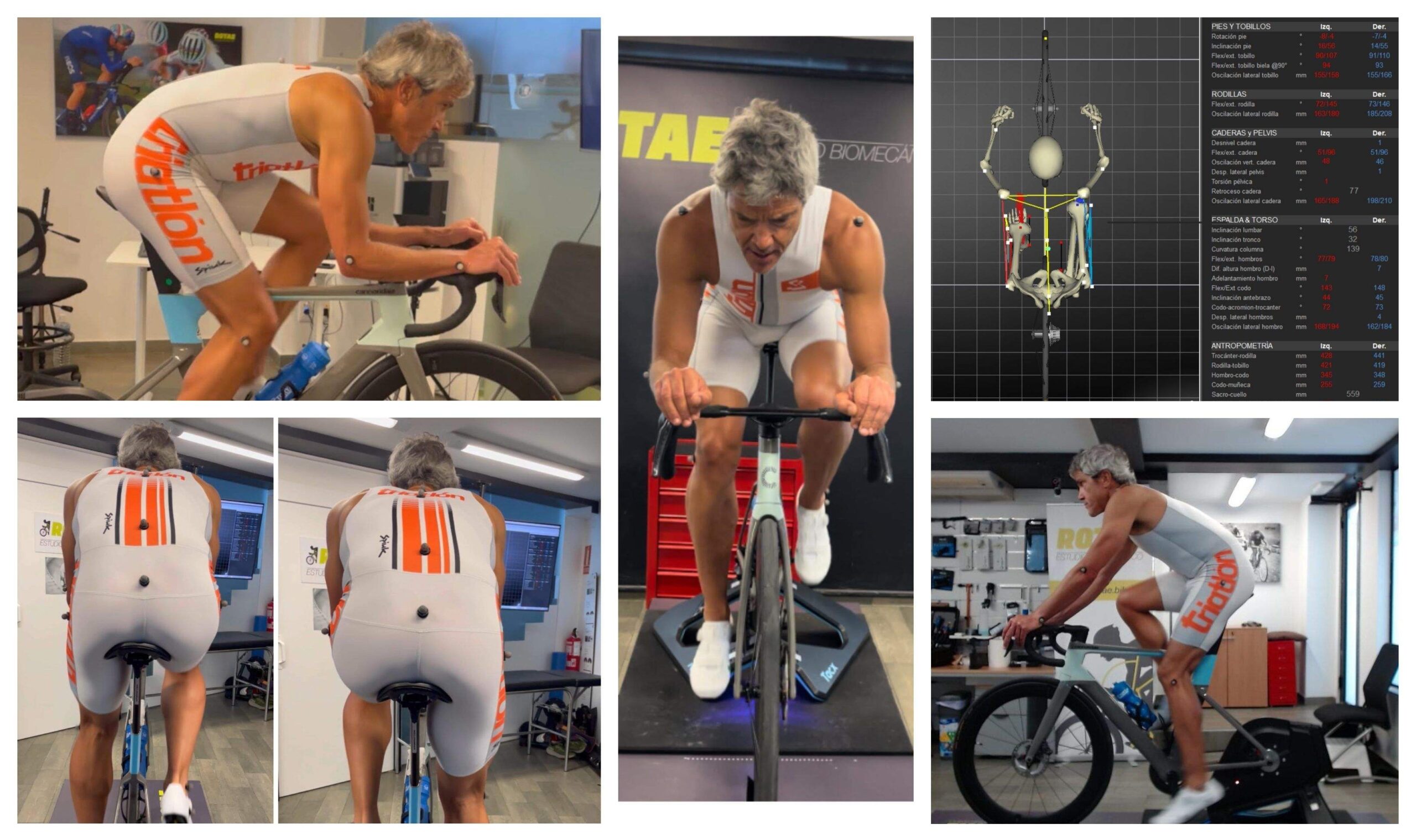
On 24 June 2024, TriatlonWeb, one of Spain’s leading digital media outlets specialising in triathlon and cycling, published an article on ROTAE, a leading centre for cycling biomechanics in Pamplona. The article, written by health contributor Alberto Cebollada, highlighted the experience of its CEO, Juan Peralta Gascón, and the integration of STT Systems’ 3D motion capture technology, used to optimise the position and performance of triathletes and amateur cyclists. You can read the full article here.
TriatlonWeb: a leading media outlet in the world of triathlon and cycling
TriatlonWeb has established itself as a leading portal in Spain for triathlon and cycling enthusiasts and professionals. Its content ranges from current news and equipment reviews to articles on health, training and athletic performance. The relevance of this media outlet lies in its ability to disseminate technical knowledge and practical experiences, connecting athletes with specialised professionals and leading centres in biomechanics and physical training.
Being mentioned on TriatlonWeb represents external, specialised recognition of our technology and expertise, boosting our visibility among an audience interested in improving their athletic performance through applied science.
Rotae and the experience of Juan Peralta Gascón
The TriatlonWeb article highlights Juan Peralta Gascón, CEO of Rotae and former professional track cyclist, who competed in the 2010 London and 2016 Rio de Janeiro Olympic Games, multiple national and international championships, and has extensive experience in high performance. His in-depth knowledge of pedalling dynamics and aerodynamic efficiency is combined with 3D motion capture technology to provide detailed, personalised analysis for each cyclist or triathlete.
Juan Peralta brings a unique perspective to the process, as he does not limit himself to technical data, but rather integrates his experience in high performance with individualised biomechanical interpretation, adapting each adjustment to the athlete’s body structure, flexibility and needs.
STT Systems technology: capturing movement in 3D
The STT System is a 3D motion capture system designed to analyse pedalling patterns, positions on the bicycle and movement efficiency. This technology records the movement of each joint with millimetre precision, thanks to the placement of reflective markers at strategic points on the body, such as the hips, knees, ankles, shoulders and spine.
Using multiple cameras, the system generates a complete three-dimensional representation of the athlete in action, allowing for the evaluation of:
- Hip, knee and ankle angles.
- Pedalling symmetry and pelvic stability.
- Efficiency in power delivery to the pedals.
- Position of shoulders, back and torso, optimising comfort and aerodynamics.
The integration of this system allows for the assessment of pedalling kinematics in motion, providing information that cannot be obtained solely through static or traditional measurements.
Biomechanical study process at Rotae
The TriatlonWeb article describes in detail how a complete biomechanical study is carried out, aimed at triathletes and amateur cyclists, using STT Systems technology:
1. Initial assessment
The study begins with a detailed interview about the cyclist’s sporting experience, injury history, weekly mileage and training hours, and complementary activities such as running, swimming or strength training. This information allows the biomechanist to contextualise the data and tailor the analysis to each athlete.
2. Anthropometric assessment
Next, an anthropometric analysis is performed, which includes:
- Spinal curvature and alignment.
- Pelvic tilt and hip symmetry.
- Leg length and alignment, knee varus or valgus.
- Footprint, pronation and supination of feet.
These measurements allow us to identify possible structural alterations that may cause discomfort or increase the risk of injury, guiding the client to consult with physiotherapists or podiatrists if necessary.
3. Dynamic pedalling analysis
The next step is to analyse pedalling in motion by placing reflective markers on key joints. The cyclist stands on a roller connected to the 3DMA STT System software, which records the complete kinematics of pedalling.
This analysis allows us to measure:
- Knee and ankle extension in each phase of pedalling.
- Pelvic oscillations and lateral movements.
- Power delivery efficiency and cadence.
- Necessary adjustments to the saddle, handlebars and cleats.
Thanks to these measurements, personalised adjustments can be made, optimising posture to improve performance and reduce discomfort while pedalling.
4. Personalised adjustments and feedback
The key to the study lies not only in obtaining data, but also in its professional interpretation. Each modification of the saddle, handlebars or cleats is made by simultaneously assessing the biomechanical parameters and the cyclist’s sensations, ensuring that the final position is comfortable, efficient and safe.
Benefits for triathletes and cyclists
The article highlights the main benefits of conducting a biomechanical study with STT Systems:
- Injury prevention: identifying asymmetries, overloads and imbalances reduces the risk of musculoskeletal injuries.
- Performance optimisation: adjusting your position and pedalling efficiency improves power and reduces energy expenditure.
- Comfort and ergonomics: an adapted posture reduces tension in the back, shoulders, neck and legs.
- Improved aerodynamics: adjustments allow for more effective positions in medium and long distance events.
- Personalised feedback: athletes can compare their initial results with those obtained after adjustments, observing specific improvements.
Relevance of the mention for STT Systems
Being mentioned on TriatlonWeb reinforces our technical authority and reputation in the field of sports biomechanics and 3D motion capture. The publication demonstrates how our technology is applied in a practical way in high-level centres such as Rotae, contributing to improving efficiency, injury prevention and the performance of cyclists and triathletes.
Furthermore, this visibility shows that our expertise is not limited to laboratories or scientific research, but has a direct impact on sports practice, both in training and rehabilitation.
This is recognition of the innovation, precision and applicability of STT Systems in biomechanical analysis. Our systems enable athletes and professionals to obtain detailed information about their movement, optimise their posture and performance, and reduce the risk of injury, all with a personalised approach based on scientific evidence.
We invite clubs, coaches, physiotherapists and athletes to learn more about our services and discover how STT Systems technology can improve the efficiency and safety of their training and biomechanical assessments. For more information about our systems and services, please visit our products and solutions page.