


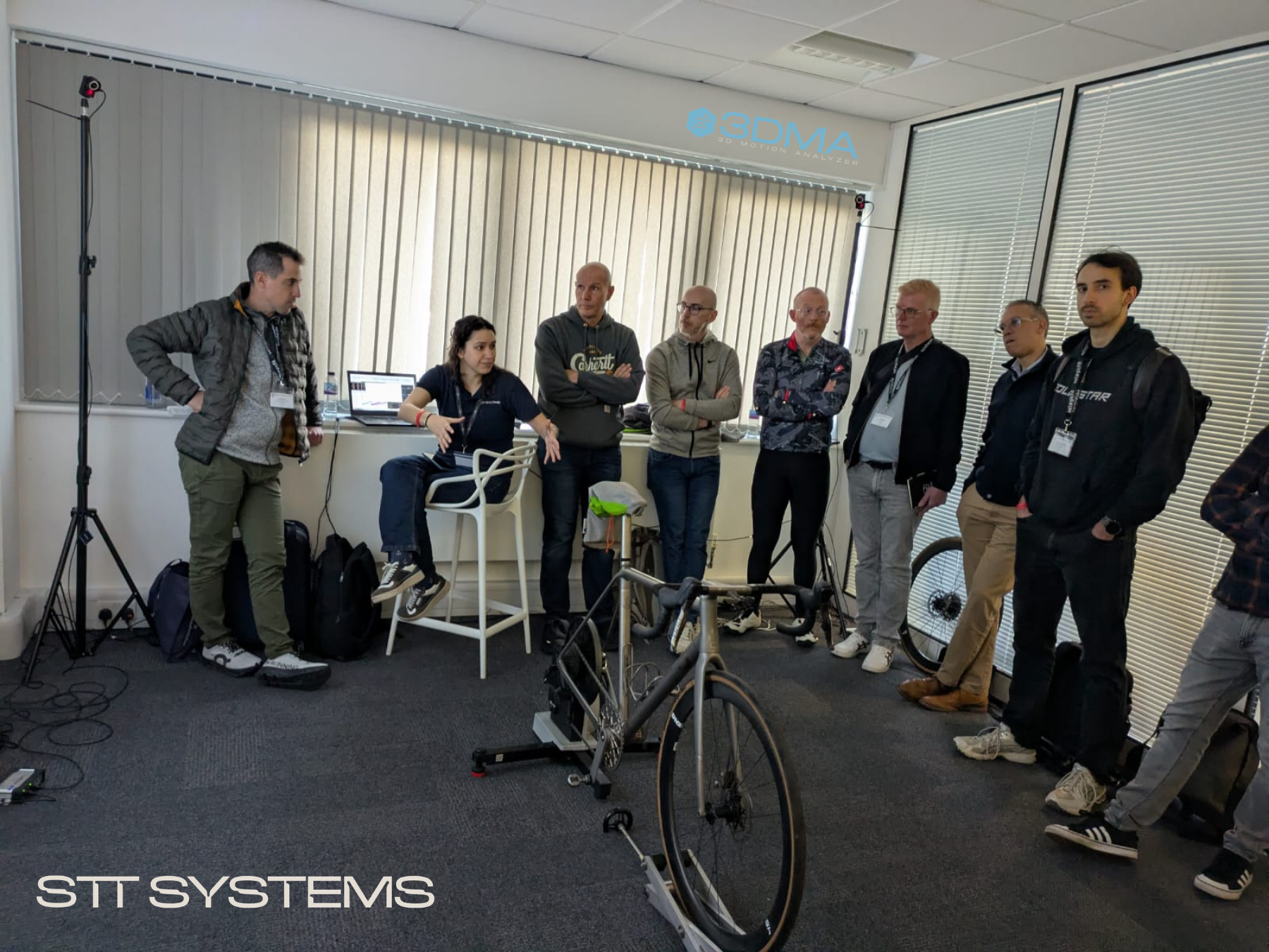
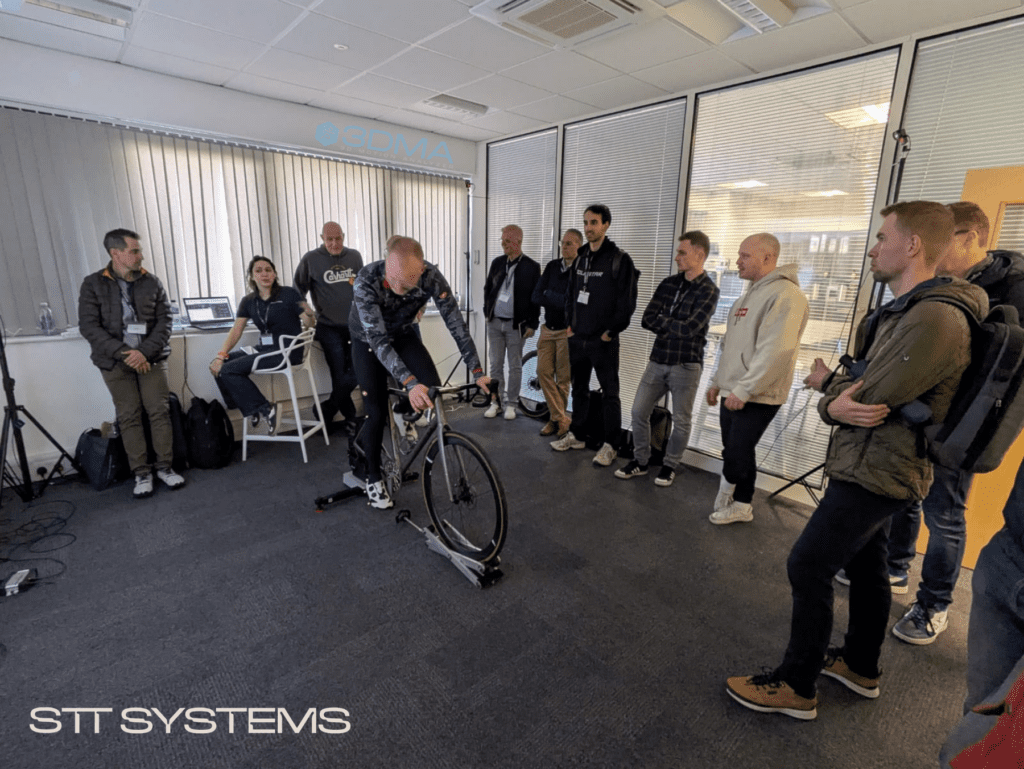
On 23rd and 24th February 2026, STT Systems participated in the IBFI Global Conference 2026, one of the most relevant international events for professionals in bike fitting, cycling biomechanics and applied performance engineering. Our biomedical engineer and biomechanics specialist, Paula Flórez Herrera, led a practical workshop where attendees experienced first-hand the use of the 3DMA system for cycling, our 3D motion capture technology designed to enhance performance, safety, and efficiency for cyclists.
Practical 3DMA Workshop: Advanced Biomechanical Analysis
During the workshop, participants learned how to integrate 3D motion capture into their daily professional bike fitting practice. Thanks to the computer vision programs and the precision of the 3DMA system, professionals explored advanced cyclist technique analysis, evaluating posture, body alignment, and joint kinematics in real time.
The main goal was to demonstrate how objective data can optimise cycling position, improving mechanical efficiency and reducing aerodynamic resistance. Every adjustment, from saddle height and setback to cleat position and crank length, could be analysed and validated with precise metrics, giving scientific support to every decision.
Benefits of the 3DMA System for Cyclists
Attendees experienced the main benefits of the STT Systems 3DMA system, including:
| Detailed biomechanical analysis of the cyclist | Assessment of posture, joint movements, and body alignment in relation to the bike. |
| Optimisation of cycling position | Precise adjustments to improve efficiency, comfort, and aerodynamic performance. |
| Customisation of components and settings | Saddle height, crank length, handlebar angle, and cockpit position adapted to the cyclist. |
| Monitoring of pedal symmetry and balance | Detection of functional asymmetries that could lead to injuries. |
| Real-time performance assessment | Immediate feedback to adjust technique during sessions. |
This functionality allows professionals to make precise, evidence-based decisions, reducing risks and improving outcomes for each cyclist.
Performance Optimisation through Objective Metrics
The 3D biomechanical analysis provided by STT Systems enables professionals to move beyond subjective observation. Quantifying joint kinematics, load distribution, and pedal efficiency provides a deeper understanding of cyclist performance.
During the workshop, participants saw how combining motion capture with angular measurement allows:
- Identification of efficiency losses due to technical deviations in pedalling.
- Analysis of muscle compensations and repetitive patterns that may cause overload.
- Position adjustments to maximise force transfer and improve movement economy.
This data-driven approach makes professional bike fitting more reliable, replicable, and effective, increasing the cyclist’s confidence in every adjustment.
Injury Prevention through Movement Analysis
Safety and injury prevention are crucial in any training or bike fitting programme. The workshop highlighted how the 3DMA system identifies risk patterns by analysing posture, load distribution, and pedalling symmetry.
Common cycling injuries include patellofemoral syndrome, patellar tendinopathy, hip overload, and mechanical lower back pain. Early detection of biomechanical deviations allows targeted corrective adjustments and personalised injury prevention programmes, reducing risk over the medium and long term.
Attendees learned to use the data to make real-time adjustments, ensuring each cyclist maintains an efficient and safe technique tailored to their morphology and pedalling style.
Practical Application in Retail and Specialist Studios
The workshop also demonstrated how to integrate 3D motion capture in specialist retail and bike fitting studios. Using 3DMA, professionals can:
- Determine the optimal bike frame size for each cyclist.
- Adjust initial setup before delivery.
- Personalise the purchase experience with objective data.
- Reduce the need for subsequent adjustments through precise measurements.
This integration transforms applied biomechanics into a strategic factor for differentiation and customer loyalty, delivering a professional and highly customised service.
Training and Professionalisation in Bike Fitting
Paula Flórez’s workshop also emphasised the importance of continuous learning and the professionalisation of bike fitting. Combining practical experience with objective data allows attendees to understand how to raise the standard of their services and deliver results based on scientific evidence.
The workshop covered measurement techniques, data analysis, and adjustment validation, showing how a structured methodology based on 3D motion capture and kinematic analysis significantly improves decision-making in studio practice.
The Future of Professional Bike Fitting
The 3DMA workshop at the IBFI Global Conference 2026 demonstrated how applied biomechanics, 3D motion capture, and objective pedalling analysis are essential for optimising performance, preventing injuries, and professionalising bike fitting services.
STT Systems continues to develop technologies that provide professional insight, reliable data, and measurable improvements. Our participation in the IBFI Global Conference 2026 reaffirms our commitment to evolving bike fitting toward a more precise, measurable, and evidence-based practice.
The workshop provided a unique opportunity for attendees to experience the power of 3DMA in cycling and understand how 3D motion capture can transform professional practice.
We are confident that combining hands-on training, advanced technology, and objective analysis will continue to shape the evolution of professional bike fitting worldwide.