


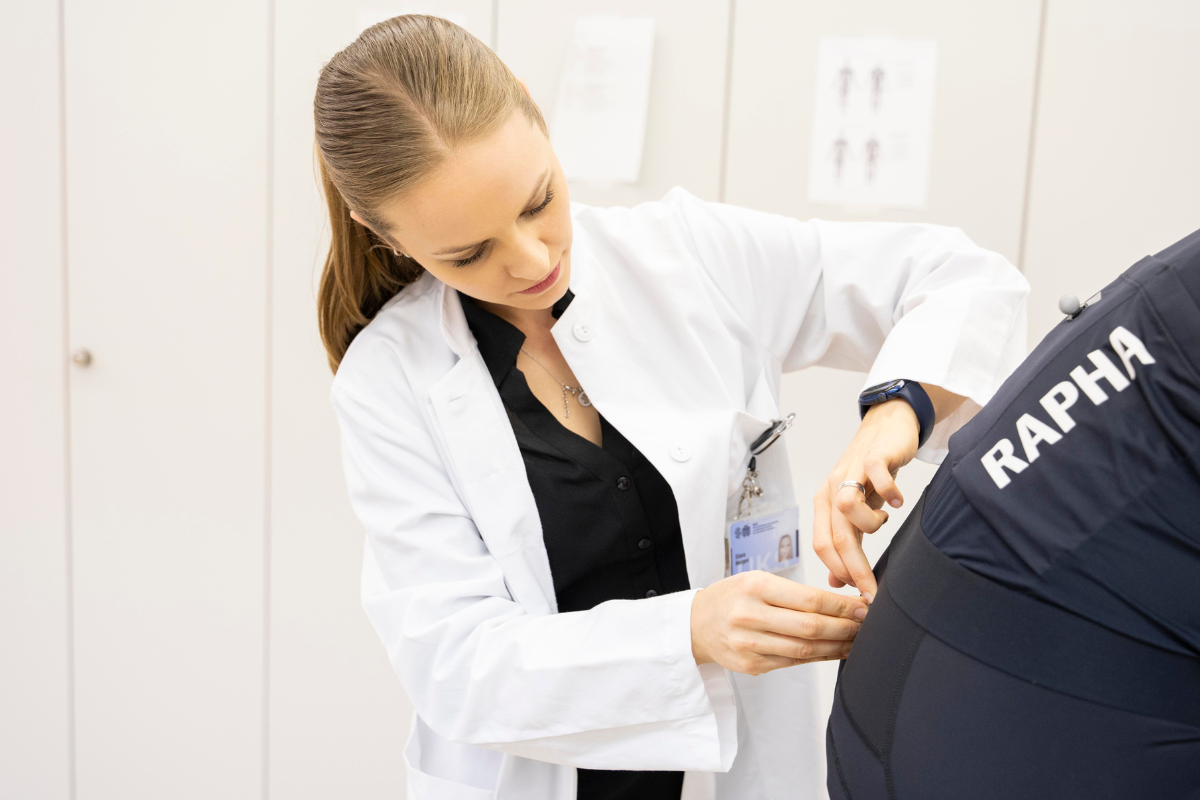
Returning to training after an injury is one of the most delicate phases for any athlete. Even when pain has subsided and strength appears to be restored, many athletes experience new injuries in the weeks following their return. In most cases, the issue is not the tissue itself, but altered movement patterns that remain hidden if they are not assessed objectively.
For this reason, an increasing number of clinics are incorporating biomechanics-based sports rehabilitation into the return-to-play process, with the aim of reducing recurrence rates and improving the overall quality of recovery.
Why do recurrences occur after a sports injury?
During recovery, the body adopts protective mechanisms that modify the way an individual moves. These adaptations can persist even when the athlete no longer feels pain. The most common include:
- Changes in load distribution between limbs
- Reduced stability during dynamic support
- Altered coordination between body segments
- Asymmetries that increase stress on previously vulnerable tissues
These deficits are not always visible to the naked eye and can go unnoticed in conventional clinical assessments, which explains why many athletes relapse even when they meet traditional discharge criteria.
What does it really mean to be ready to return to competition?
The modern concept of return to play has evolved. Restoring strength and range of motion is no longer sufficient; it is also essential to determine whether the athlete has regained neuromuscular control and movement efficiency specific to their sport. At this stage, biomechanical assessment in sports rehabilitation makes it possible to analyse functional variables such as symmetry, stability and coordination during real movement tasks.
This is particularly relevant in sports involving repetitive or explosive actions, where minor technical alterations can significantly increase the risk of injury. Assessing how the athlete moves in situations that closely resemble competition helps identify deficits that may not appear during isolated exercises.
What does biomechanical analysis add to sports rehabilitation?
Biomechanics enables precise quantification of movement and transforms clinical observation into objective data. This makes it possible to:
- Identify compensations invisible to the human eye
- Compare functional progression over time
- Assess symmetry and the quality of sport-specific technique
- Make clinical decisions based on metrics rather than perception alone
This approach makes rehabilitation more personalised and reduces reliance on subjective criteria, which is especially important in professional and high-performance settings.
How is movement measured in clinical practice?
There are currently several technologies that allow movement analysis to be integrated into sports rehabilitation. 3D motion capture systems provide a comprehensive view of movement, enabling the analysis of joint angles, velocities and coordination sequences during running, jumping or changes of direction.
One example of this technology is the 3DMA system, used in both clinical and sporting environments to accurately assess human movement and support decision-making in rehabilitation and injury prevention processes.
In addition, inertial sensors make it possible to extend assessment into real training contexts, facilitating functional monitoring of the athlete outside the laboratory.
Benefits for athletes, clinics and technical teams
Integrating biomechanics into sports injury rehabilitation benefits not only the athlete but also the professionals and organisations managing their recovery. For the athlete, it means returning to sport with greater safety and confidence. For physiotherapists and rehabilitation specialists, it provides objective tools to justify decisions and adjust treatment. For clubs and insurers, it reduces the risk of recurrence and the associated costs of further absences.
This data-driven approach also improves communication among the professionals involved in the recovery process, as everyone can work with clear, comparable metrics.
When should biomechanics be integrated into the recovery process?
Whether you work with professional athletes or active patients, objective movement assessment can improve results and set your centre apart.
DISCOVER 3DMAWhen to integrate biomechanics into the recovery process
For biomechanical analysis to have a real impact, it should be used at key stages of rehabilitation:
- At the beginning, to identify functional deficits following the acute phase
- During the reconditioning phase, to verify whether compensations are being corrected
- Before discharge, to assess whether sport-specific movement is safe and efficient
In this way, biomechanics becomes a continuous monitoring tool rather than a one-off assessment, helping to reduce uncertainty in clinical decision-making.
Returning to sport after injury should not be based solely on the absence of pain. Recurrences are often linked to movement alterations that can only be detected through objective assessment. Sports rehabilitation supported by biomechanical analysis allows these risks to be identified, recovery to be personalised and return-to-play decisions to be made more safely.
Measuring how an athlete moves is now one of the key factors in ensuring they return not just as they were before, but better prepared to withstand the demands of their discipline and reduce the likelihood of future injury.