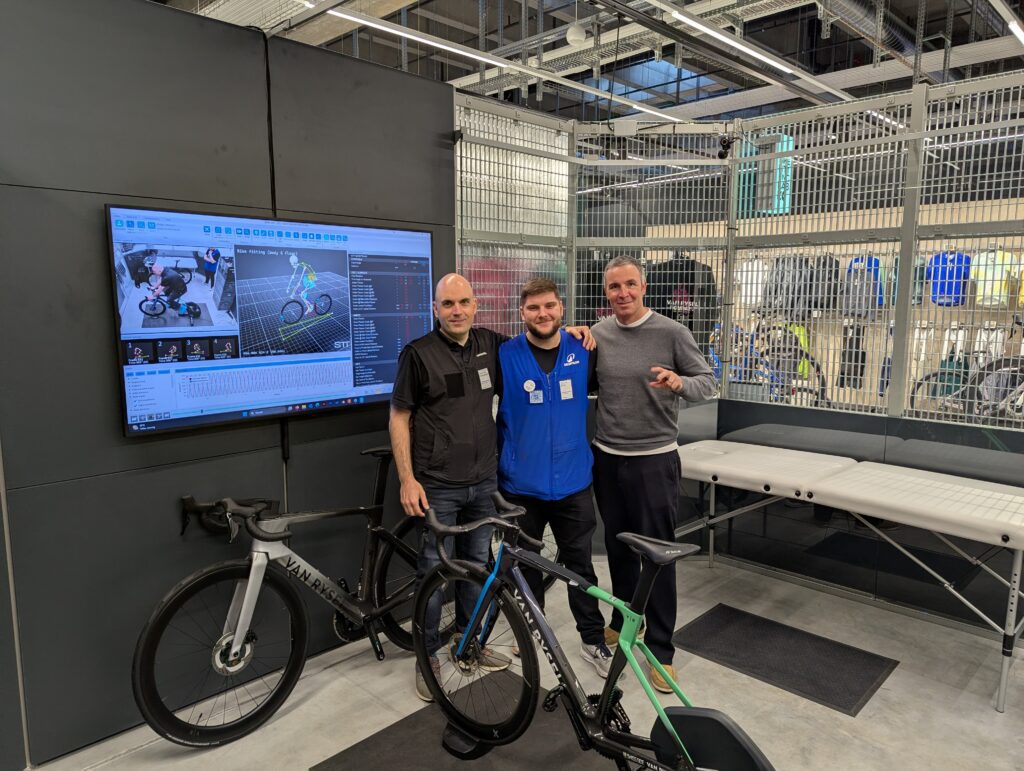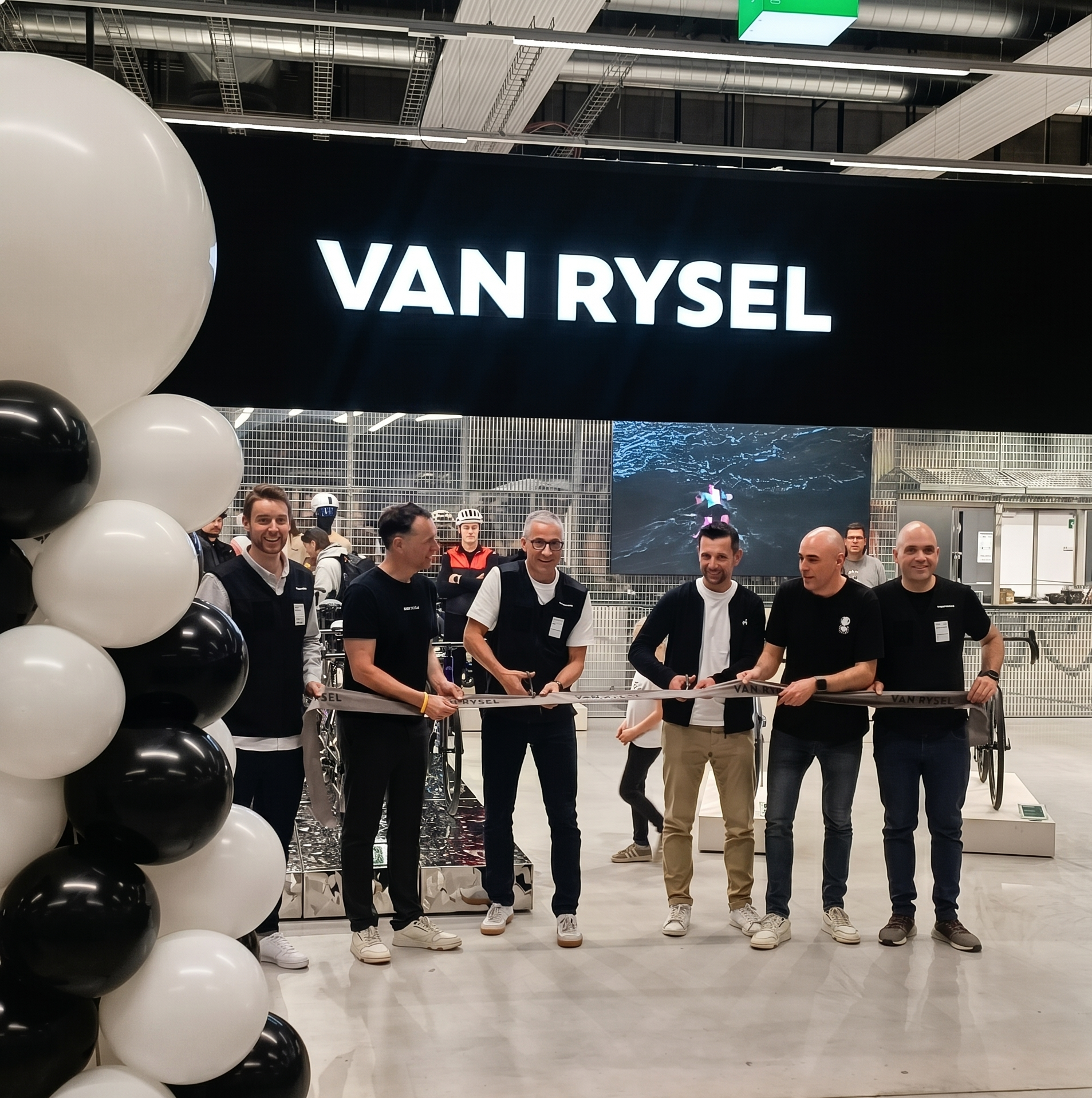
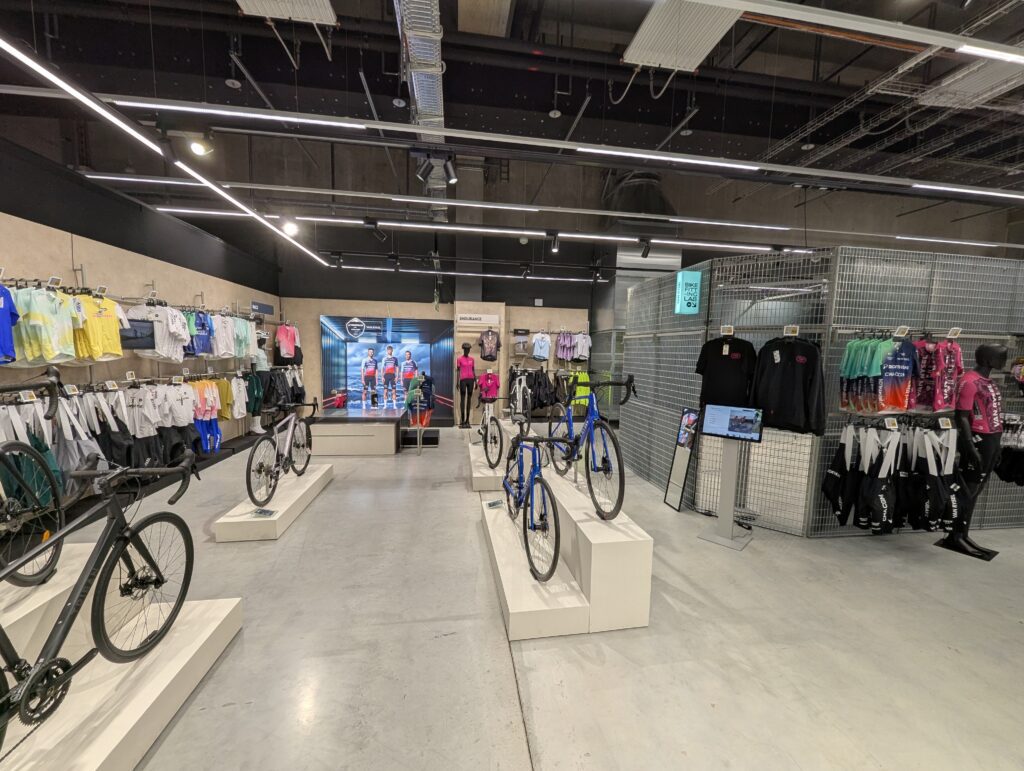
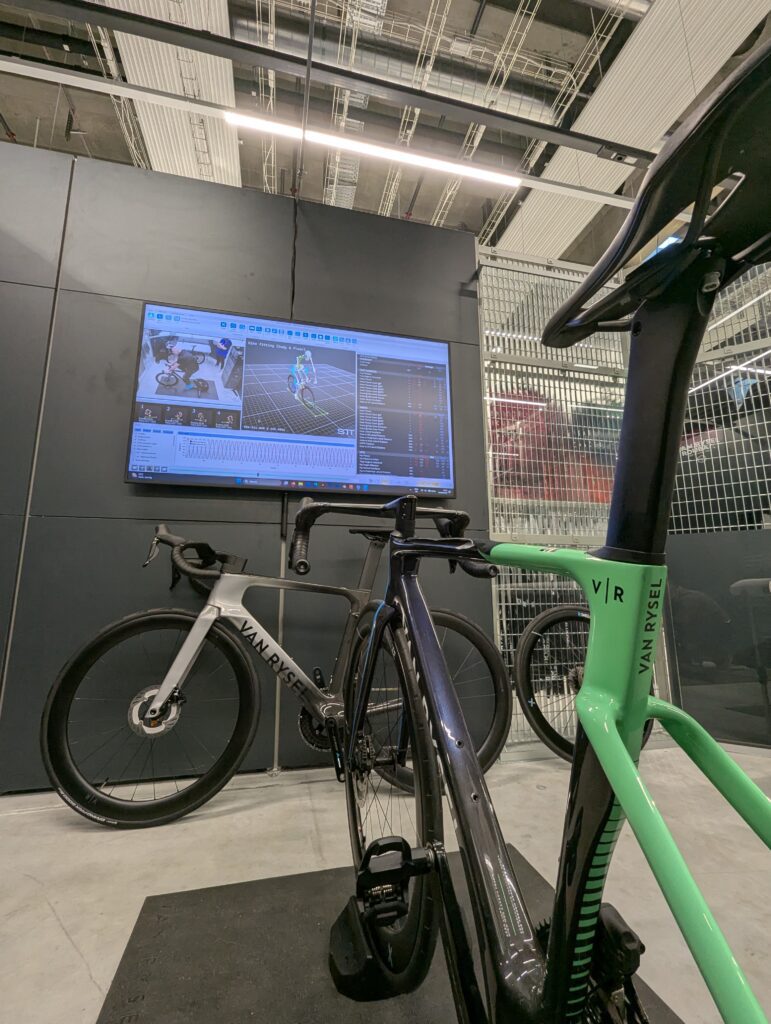
On 15 April 2026, we attended the opening of Van Rysel’s new space within Decathlon in Spreitenbach (Shoppi-Tivoli), an environment where biomechanical data capture is directly integrated into the point of sale. This is not merely the launch of a new service, but a clear sign of where the large-scale cycling business model is heading. What we saw there is not just another space within a shop, but a new way of understanding the relationship between product, user and performance.
No estamos ante una idea completamente nueva, ya que este tipo de servicios ya existían en tiendas especializadas de menor tamaño. Sin embargo, lo relevante en este caso es el contexto en el que se implementa: una gran superficie retail, con capacidad de estandarización, volumen y exposición muy superior a la habitual en el sector.
The change lies not so much in the concept as in the scale of its adoption. What was once a distinctive service, reserved for highly specialised environments, is beginning to be integrated as part of a more structured and accessible shopping experience. The focus is shifting from simply choosing a bicycle to a process in which the cyclist’s performance begins to be analysed from the very first point of contact, based on objective data.
In other words, the purchasing decision is beginning to merge with biomechanical analysis. The emphasis is shifting away from the product alone and towards performance, understood as something measurable, adjustable and validated by technical data.
And it is precisely here that the strategic significance becomes clear: this is not an isolated development, but a shift in the sector’s direction. What is being launched is not merely a space within a shop, but a new dimension in the cycling shopping experience.
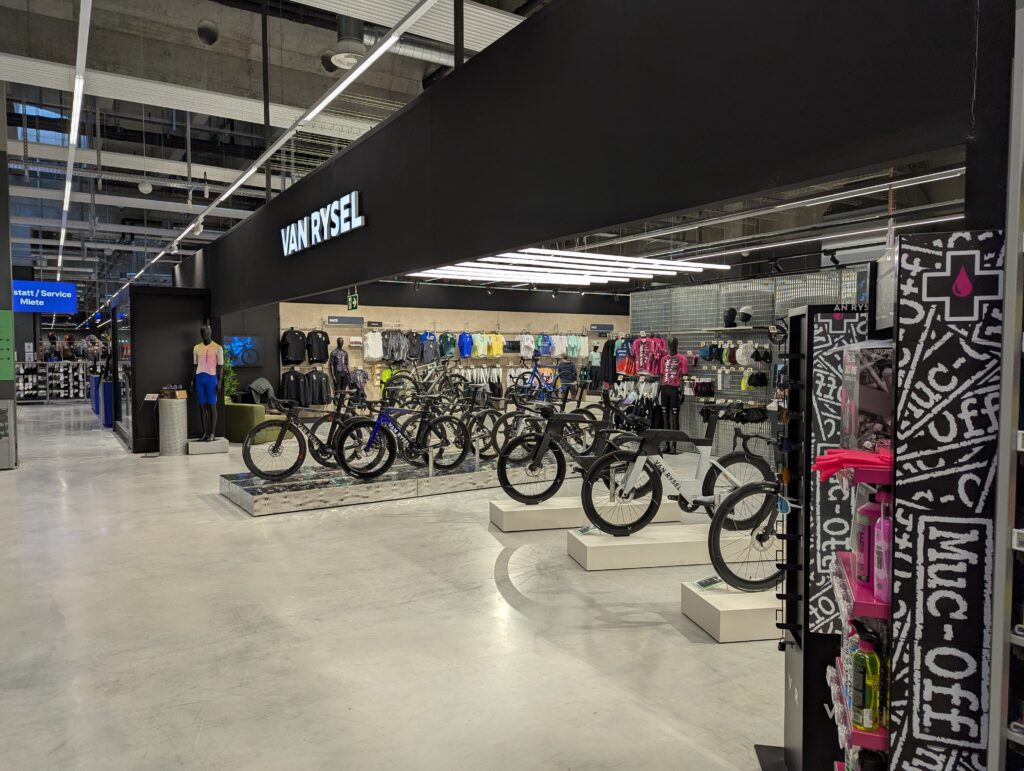
Performance is the name of the game
If we look at Van Rysel’s recent development, a very clear business narrative emerges: they have gone from being seen as just another brand within a multisport ecosystem to positioning themselves as a major player in global high-performance cycling.
Its origins in Lille, right at the heart of French Flanders and European cycling, are no coincidence. It is a region where every stretch of cobblestone, the way of life, respect for the environment, every amateur and professional cycling race, and a deep-rooted cycling tradition have forged a culture obsessed with detail, endurance and speed. In this context of extreme demands, the brand has built its value proposition on three non-negotiable pillars:
- Data-driven engineering: design decisions based on telemetry and wind tunnel data, not on aesthetic assumptions.
- Collaborative development with athletes: direct integration of feedback from the Decathlon CMA CGM WorldTour Team (formerly Decathlon AG2R La Mondiale).
- Optimisation of every watt, second and kilometre: the constant pursuit of marginal gains.
The message they are sending to the market is clear: We don’t sell bikes, we design systems to win. But the truly disruptive move from Spreitenbach isn’t in the carbon fibre or the integration of SRAM wireless drivetrains. It’s in the model of customer interaction.
From ‘Ride like a PRO’ to ‘Fit like a PRO’.
The in-store lab: the strategic evolution of sports retail
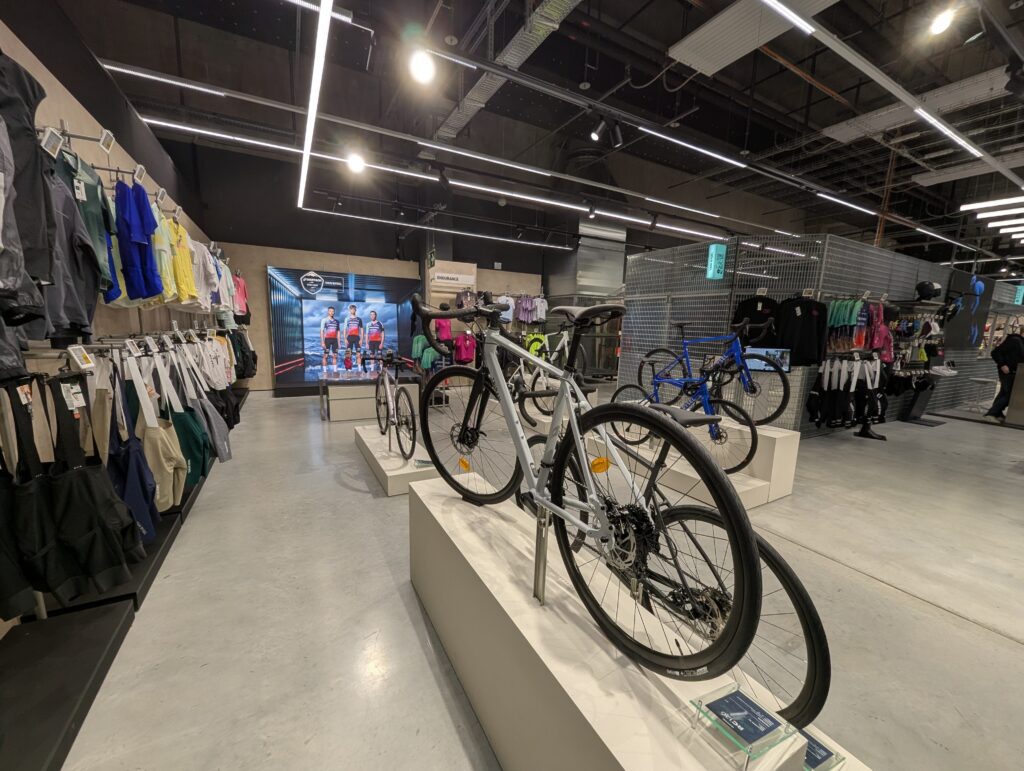
The opening of the Van Rysel Shop (Switzerland’s largest at 6,000 m²) is not just a flagship store. It is a true performance hub. We are talking about a space where the following elements coexist synergistically:
- Product: professional-grade equipment.
- Experience: community events and Social Rides.
- Community: the space as a technical meeting point.
- And most importantly: real-time biomechanical data.
This implies a structural change in the cyclist’s Customer Journey:
| Aspecto | Modelo anterior (antes) | New standard (now) |
|---|---|---|
| Basis for decision | Subjective impressions during a ~5-minute test ride | Objective biomechanical data prior to purchase |
| Influences | Recommendations from third parties or industry magazines | Own analysis based on measurements and data |
| Relationship with the brand | Blind loyalty to a brand | Informed decision, independent of the brand |
| Bike fitting | Basic subjective adjustments | Pre-purchase fine-tuning or biomechanical fitting based on objective data |
| Purchase validation | Personal perception | Validation using quantitative data and visualisation of the impact |
| Performance optimisation | Limited or post-purchase | Prior optimisation of aerodynamics and power generation |
This technological tsunami has direct and profound implications for three key professional profiles:
Adapt or become a showroom
If you run a premium cycling shop, the current changes in the sector should prompt immediate strategic reflection. Customers no longer come in simply to buy a product. Their expectations have evolved towards a more comprehensive service model that includes:
- Expert and technically sound advice
- Genuine differentiation from other market options
- Tangible added value that directly enhances their performance
The central question for any business in the sector is this: Does your shop sell bicycles or does it sell performance?
| Model | Enfoque | Consequence |
|---|---|---|
| Product sales | Price-based competition | Pressure on margins and direct competition with online retailers |
| Performance-based sales | Value-added services such as bike fitting | Greater customer loyalty, sustained differentiation and generation of recurring revenue |
If the business focuses solely on product sales, competition inevitably shifts to price, with the added difficulty of competing with the digital environment. Conversely, when the focus shifts to performance, the positioning changes: perceived value increases, customer loyalty is strengthened, and new opportunities for recurring revenue are generated through specialised services such as bike fitting.
Clinical biomechanics: an opportunity for growth or a loss of market position
For clinical and technical professionals, the growing popularity of these spaces presents a two-sided picture:
| Dimension | The great opportunity | The real risk |
|---|---|---|
| Customer awareness | Greater awareness among end customers of the importance of ergonomics and biomechanics | Misinterpretations by end users when accessing basic tools |
| Demand for services | Exponential increase in demand for pre-purchase bike fitting and for adjusting bicycles to the customer’s unique biomechanics | Market saturation without clear differentiation of value |
| Integration of services | Opportunity to integrate clinical services into retail environments or form strategic alliances | Professional encroachment if there is no clear technological differentiation |
| Professional positioning | Strengthening the specialist’s role through advanced, data-driven technology | Loss of positioning as a ‘specialist’ if basic methods are maintained in the face of optical capture |
The key to survival here is crystal clear: it is not enough simply to measure; you have to interpret the data better than anyone else.

Access to data in real-world environments
For the academic and R&D sectors, the ‘shop-in-shop’ model opens the door to a fascinating new research paradigm:
- Massive capture of kinematic data under real-world market conditions.
- Access to a large and diverse user base (from amateurs to professionals).
- Validation of biomechanical hypotheses in environments not controlled by the traditional laboratory.
This turns these commercial spaces into genuine applied micro-laboratories.
Biomechanics as a competitive advantage
This is where we reach the critical point. Purchasing a camera system and installing it is relatively straightforward. The challenge lies in converting that data into useful insights for performance or clinical practice.
La biomecánica aplicada al ciclismo no consiste en colocar marcadores y generar informes visuales. Consiste en responder preguntas concretas que tienen impacto directo en el ciclista:
- ¿Por qué disminuye la eficiencia de pedaleo cuando aumenta la fatiga en esfuerzos largos?
- What biomechanical compensations are associated with pain on the outer side of the knee or the iliotibial band?
- What positional changes yield a real improvement in aerodynamics without compromising power output?
- How does joint kinematics change as the cyclist becomes fatigued, and how does this affect their technique?
Answering these questions rigorously requires three key elements: measurement accuracy, rapid analysis and a genuine ability to integrate data.
3DMA is the real game-changer
Whilst much of the market is beginning to move by inertia towards visual motion capture, there is an uncomfortable reality in the technology industry: not all systems are ready for a truly demanding professional environment.
There are low-cost AI-based solutions that estimate movement with high margins of error, and, on the other hand, excessively complex institutional systems that jeopardise the economic viability of any business. In this context, 3D optical capture solutions such as 3DMA represent a turning point. Not because it replicates the same process, but because it redefines the standard: it offers greater accuracy, improves accessibility and enables a much more sustainable implementation model at both the operational and business levels.
Real Precision Because Every Millimetre Matters
In high performance and advanced clinical settings, this is not an accessory element. It is precisely what separates a basic visual adjustment from a prescription with real clinical validity.
| Area | Risk in high-performance cycling | Contribution of the 3DMA standard |
|---|---|---|
| Adjustment precision | Small variations in functional saddle height can compromise efficiency | Spatial tracking error below 1 mm |
| Cyclist position | Incorrect setback relative to the bottom bracket axis affects pedalling biomechanics | High-speed optical capture (up to 360 FPS) for reliable analysis at high cadences |
| Joint dynamics | Deviations in knee extension angle or lateral tracking generate compensations | Full-body 360º kinematic analysis |
| Performance and power | Loss of power transfer due to poor overall alignment | Precise measurement enabling optimisation of mechanical efficiency |
| Health and prevention | Sobrecargas articulares, compresión vascular y riesgo de lesión crónica | Comprehensive assessment reducing clinical interpretation errors |
Shorter analysis times, higher sales and greater value per session
In high-traffic retail environments, time efficiency in the workflow directly influences both the user experience and the profitability of the service. When the process is slow, the negative impact is immediate; when it is streamlined, the value is multiplied across the entire operation.
The tangible result of this agility is a better user experience, shorter sales or session cycles, an increase in conversions and a higher average spend, justified by the immediacy and precision provided by the technology.
Impacto del flujo de trabajo y valor de 3DMA
| Dimension | Slow workflow | Workflow with 3DMA | Tangible impact |
| Customer experience | Loss of patience and perception of low efficiency | Real-time feedback during analysis | More fluid and professional experience |
| Operations | Fewer sessions per hour | Live 3D visualisation and immediate analysis | Greater operational efficiency |
| Toma de decisiones | Procesos lentos y poco visuales | Comparativas instantáneas “antes vs. después” | Decisiones más rápidas y seguras |
| Profitability | Lower revenue per hour of work | Optimisation of session time | Increased profitability per hour |
Ecosystem integration is everything
Many solutions on the market offer limited integrations or rely on closed ecosystems that restrict the degree of connection with other technologies. In modern sports performance analysis, the value lies not in isolated data, but in the ability to combine it with different sources of information to build a more comprehensive and contextualised view of the athlete.
| Technology | What It provides | Value in analysis |
|---|---|---|
| Force platforms | Measurement of applied forces and load distribution | Direct relationship between kinematics and kinetics to understand mechanical efficiency and power generation |
| Surface electromyography (Delsys EMG) | Muscle activation, timing, and fatigue in real time | Synchronous neuromuscular analysis with movement to identify inefficiencies and compensations |
| Saddle pressure mapping (Velometrik) | Pressure distribution and load points at the cyclist–bike interface | Optimisation of comfort, injury prevention, and fine-tuning of position |
| External sensors + statistical software (HR, power, etc.) | Physiological and performance variables + advanced data processing | Contextualisation of biomechanical analysis and data-driven decision-making based on multidimensional inputs |
Direct application, beyond bike fitting
Cuando hablamos de captura biomecánica en ciclismo, uno de los errores de enfoque más habituales es limitar su uso únicamente al bike fitting, entendido como el ajuste de las medidas de la bicicleta al ciclista. Sin embargo, su verdadero valor en manos de un profesional va mucho más allá, ya que permite abordar el rendimiento, la prevención de lesiones y la personalización del entrenamiento y preparación del atleta desde una perspectiva mucho más completa.
This translates into direct applications in various areas of biomechanical work:
| Area | Objective | Main applications |
|---|---|---|
| Optimisation of pedalling technique | Improve the efficiency of the sporting gesture | Analysis of joint kinematics (hip, knee, ankle); detection of dysfunctional patterns under load; identification of inefficiencies at dead spots within the pedalling cycle |
| Injury prevention and rehabilitation | Reduce injury risk and improve recovery | Detection of pelvic and functional asymmetries; three-dimensional analysis of load distribution; correction of muscular compensations associated with chronic pain |
| Performance enhancement | Aumentar la eficiencia mecánica y energética | Maximisation of net power transfer; optimisation of aerodynamic posture without compromising respiratory and pedalling mechanics; improved efficiency in long-duration efforts |
| Personalisation of fit | Adapt the bicycle to the individual rider | Adjustments based on actual ranges of motion (ROM); objective selection of components (cranks, handlebars, etc.); longitudinal monitoring and progressive adjustment for the athlete |
The real difference: technology you can understand and that adapts to you
This is where a significant part of the technology sector falls short. There are highly advanced solutions, with great computing power, precise sensors and high-level data generation. However, in many cases, something key is missing: a real connection with the day-to-day life of the professional using them.
In clinical and high-performance environments, where time is limited and operational pressure is constant, this is no minor detail. A complex tool that does not integrate easily into the workflow can quickly become a hindrance rather than a help.
Professionals who invest in this type of solution typically share three clear characteristics: high technical expertise, investment capacity and high expectations regarding results. But they also face very specific realities: a lack of time, the need for quick answers and the logical concern about the learning curve or the continuity of support.
That is why the real need is not merely to access advanced technology. It is to have a solution that comes with support, that is easy to understand, and that integrates naturally into daily practice.
More than just a supplier, what we’re looking for is a technology partner who is involved throughout the process.
A philosophy centred on the cyclist as a project
For us, the user isn’t just a customer; they’re a project.
In the world of premium cycle shops, this completely changes the way we work. It is not just about selling a bike or closing a deal, but about understanding each case as an individual process of performance improvement.
Every cyclist arrives with a different starting point, specific goals and potential for development over time. That is why technology and service are not viewed as one-off tools, but as part of an ongoing support process.
The aim is not merely to adjust a position or facilitate a purchase, but to build a solution that supports the cyclist’s development within the shop’s own ecosystem, creating value in every interaction.
Support throughout the entire process, not just during the fitting
The difference lies not only in the technology, but in how it is integrated into the real workflow of the store and the team’s day-to-day operations. That is why the service provided by STT to Decathlon’s Van Rysel stores goes beyond installation, covering the entire lifecycle of system use, from day one through to its consolidation in regular operations.
This translates into a guided and progressive process:
- On-site installation carried out by highly qualified technicians to ensure correct configuration from the outset.
- Team training tailored to the real retail environment, supporting initial sessions until system use becomes second nature.
- Specialised technical support, with professionals who understand biomechanics and real-use context, not just generic assistance.
- Continuous system evolution, incorporating real user feedback to enhance functionality and adapt to new business needs.
The aim is not simply to launch a tool, but to integrate it seamlessly into day-to-day operations so that it generates sustained value over time, both in terms of the customer experience and business results.
What Van Rysel’s move really means
Returning to the starting point, the opening of Van Rysel’s biomechanics laboratory at Decathlon Spreitenbach should not be interpreted as an isolated incident or a one-off brand initiative. It is a clear sign of the direction the market is taking: a structural transformation of cycling towards more technical, measurable and performance-oriented models.
This shift is best understood by analysing its main implications:
Transformation of the cycling market
| Axis of change | Current situation | Strategic implication |
| Professionalisation of cycling | The level of demand is no longer limited to the professional sphere | The advanced amateur cyclist demands high-performance level services |
| Use of data | Decision-making based on subjective experience is losing relevance | Objective data becomes the primary criterion for decision-making and authority |
| Evolution of the point of sale | The traditional transaction-focused store is losing relevance | The point of sale is evolving into a centre for analysis and human performance enhancement. A place where everything related to cycling can be found |
| Role of biomechanics | Complementary or accessory approach | Becomes a key element of competitive differentiation |
Taken together, these changes point to a clear trend: the sector is shifting towards a model in which performance, objective measurement and personalisation are no longer optional extras but are becoming the gold standard.
Where do you want to position yourself?
This is where we get into the strategic side of your business. Because this shift in the performance and health paradigm isn’t something that ‘will happen’ in five years’ time. It’s already happening today.
Faced with this reality, as a professional with decision-making power, you have only two strategic options:
| Enfoque | Consequence | |
| Option A | Remaining in a reactive position, observing market and competitive developments | Progressive loss of market share and delayed adoption of technology |
| Option B | Proactive adoption of an advanced technological ecosystem | Positioning as a benchmark in the local market or in the field of research, with a sustained competitive advantage |
How to move forward depending on your type of business
If you are in this sector and have read this far, you probably already share a fairly clear view: 3D optical biomechanics is not a future trend, but a tool that is already part of current professional practice.
From there, the question is no longer whether to incorporate it, but how to integrate it efficiently, profitably and scalably into your working model. This is where 3DMA acts as a facilitator of evolution, adapting to different professional environments.
If you run a premium cycling shop, the impact is concentrated in three main areas:
| Impact area | Description | Business outcome |
| Average ticket | Enables the value of high-end bicycles to be justified through precise, personalised biomechanical adjustments | Increased average transaction value and greater uptake of premium ranges |
| After-sales | Reduces issues such as returns, complaints about inconvenience or sizing problems | Less after-sales friction and improved customer satisfaction |
| Recurring services | Facilitates the creation of periodic adjustments based on physical changes, goals or discipline | Generation of recurring revenue and greater customer loyalty |
Overall, the result is a more robust business model, based on added value, customer loyalty and recurring revenue, rather than relying solely on one-off product sales.
From technological saturation to real competitive advantage
In a market increasingly saturated with promises, connected devices and consumer solutions, the challenge is no longer about accessing technology, but about identifying the technology that truly delivers impact, authority and profitability.
The evolution of the sector, reflected in movements such as that of Van Rysel in Switzerland, points in a clear direction: the future is not based solely on selling more bicycles or adding isolated services, but on developing ecosystems that enable cyclists’ performance to be improved continuously, efficiently and sustainably.
To operate at this level, having good technology is not enough. It is necessary to work with reliable data, precise measurements and a strategy aligned with this new industry standard. And, above all, to have a technology partner that facilitates seamless integration and development.
In this context, our approach is precisely this: to act as that technology partner in the process of evolution.
Turn biomechanics into your competitive advantage
If you’ve read this far, you’ve probably already realised: the sector is changing, and data-driven biomechanics is no longer an option, it’s a real competitive advantage.
The question isn’t whether to adopt this type of technology, but when and how to do so seamlessly.
If you’d like to see how 3D motion capture can be applied to cycling in your business or laboratory, the best way is to see it in action.
Request a personalised demo and discuss your specific needs with our team.
No strings attached, no unnecessary fuss. Just data, context and a conversation to help you make informed decisions.