


An ageing population and the depopulation of rural areas are two of the greatest demographic and social challenges we face today. The search for solutions that guarantee an optimal quality of life, maintain ties to the local area and promote personal autonomy in old age has become an unavoidable priority. Against this backdrop of transformation and the need to adapt, it is an honour for us to share our recent participation in a vitally important event that marks a turning point in the concept of geriatric care.
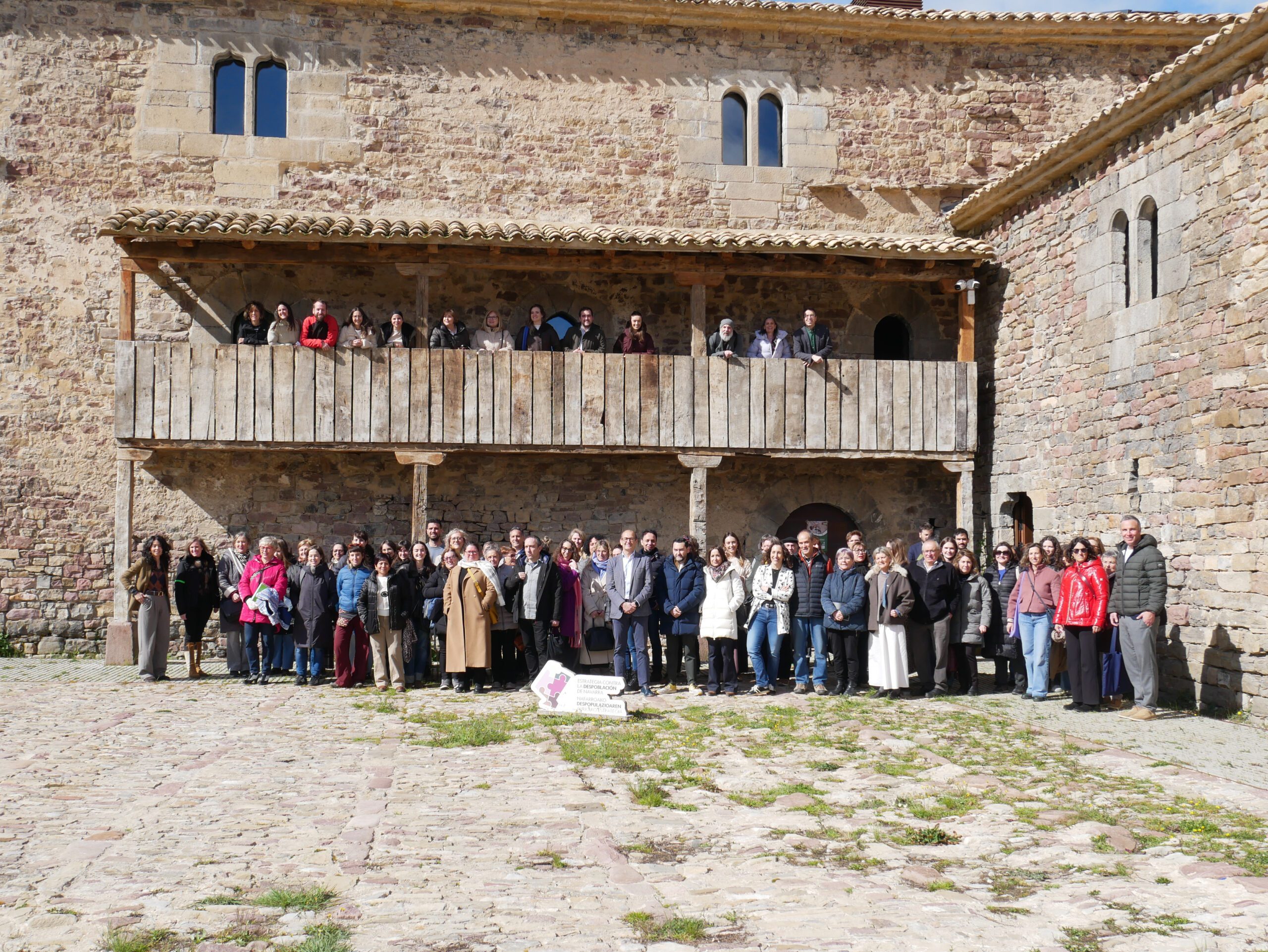
Last Friday, 27 March, we had the privilege of attending the Conference on Good Practices in Care for Older People in Rural Areas, an inspiring gathering held in the unrivalled setting of the Palacio de Arce (Navarra). This initiative, brilliantly spearheaded by Lursarea–Nasuvinsa, the Caja Navarra Foundation and the “la Caixa” Foundation through the Innova Programme, and in close collaboration with the Department of Territorial Cohesion (through the Directorate-General for Local Administration and Depopulation of the Government of Navarre), served as a key forum for rethinking the future of our elderly.
Throughout this in-depth article, we will not only outline the valuable conclusions and community projects presented during this conference, but we will also explore how biomechanical analysis and motion capture technology (our speciality) fits perfectly with this vision for the future. We will demonstrate how technological innovation is not alien to the rural environment, but rather the definitive tool for bringing preventive, objective and precision medicine to where it is most needed, combating frailty and ensuring dignified and fully monitored ageing.
The meeting at the Palacio de Arce: a public-private commitment to the region
The event brought together more than 70 participants, forming a multidisciplinary and hugely enriching ecosystem: professionals from the social and healthcare sector, associations for older people, representatives of local authorities, companies from the technology and healthcare sectors, and organisations dedicated to promoting projects related to ageing.
The meeting began with a warm institutional welcome that highlighted the urgency and importance of the topic to be discussed. We heard from:
- Javier Díez Huguet, mayor of Valle de Arce–Artzibar, who spoke on behalf of rural municipalities and highlighted their tangible realities.
- Jesús María Rodríguez, Director-General of Local Administration and Depopulation, who emphasised that these forums are absolutely essential for advancing “innovative solutions that strengthen rural communities”. His message was clear: we must build more accessible, inclusive and sustainable environments, where older people have real opportunities without having to leave their roots, their homes and their memories.
- Javier Fernández, Director General of Fundación Caja Navarra, who reaffirmed his institution’s commitment to tackling major social challenges from within the local area itself.
The “new longevities”: changing the paradigm
One of the most revealing moments of the day was the presentation by Gemma Botín, Deputy Director General for Projects and Innovation at Fundación Caja Navarra. Through the presentation of in-depth research on so-called “New Longevities”, Botín addressed the challenges facing today’s society, urging those present to rethink care models from a much broader perspective. It is no longer simply a matter of “providing care”, but of integrating wellbeing, community, preventive health and sustainability. Longevity today is a social achievement that demands commensurate responses, ensuring that the years gained in life are filled with health, mobility and purpose.
Success stories: from community to technology
During the session presenting best practices, it became clear that Navarre is a living laboratory for social and community innovation. Initiatives already operating in the region were shared, demonstrating that the fight against unwanted loneliness and physical decline requires a multi-faceted approach.
The conference served to highlight public-private collaboration as a key tool for driving innovative solutions that improve quality of life in rural areas.
Among the most notable initiatives, we were able to gain first-hand insight into projects organised around three main themes:
Social innovation and collaborative ecosystems
- Vidaas: The impact of this public social innovation centre, designed to generate new solutions to the needs of the elderly, was examined.
- Rural Nav: Local Action Groups outlined this valuable initiative, which aims to coordinate resources and make it easier to navigate the services available in rural areas, thereby preventing misinformation and isolation.
Community networks and mutual support
The neighbourhood community is the first line of defence against isolation. In this regard, we welcome initiatives such as:
- Lotura, a project presented by the La Bajera Association that strengthens intergenerational bonds.
- Zaindu Leitzaldea and the wonderful project ‘Tejiendo Cuidados’ in the Sierra de Codés (part of the ‘Tejiendo Caminos’ programme), both of which highlighted the immense value of mutual support among neighbours, creating essential emotional and logistical safety nets in villages.
Technology, health and intervention models
The link connecting home care with clinical care. Projects such as the following stood out here:
- Solera Rural, presenting a social and healthcare intervention model specifically tailored to the unique characteristics and remote nature of rural areas.
- Yarnasa, the system presented by the company Opportunity Health, demonstrating that monitoring and the use of new technologies are key allies in the health of older people.
Following the presentation of these experiences, the more than 70 attendees divided into six thematic working groups coordinated by Lursarea. In these groups, we addressed critical challenges such as the management of care homes and centres for the elderly, the promotion of healthy habits, social innovation and, crucially, the use of new technologies.
The conclusions, superbly presented by Laura Lorenzo, director of Lursarea, will serve as a roadmap for future public policies. And it is precisely within this roadmap, at the intersection of health promotion, technology and the pursuit of a fulfilling life in old age, that our vision and our motion capture systems take centre stage.
The evolutionary leap: how our technology responds to the challenge of rural longevity
Listening to the professionals at Arce reaffirmed our core mission. If our shared goal is to ensure that people can age with dignity, supported and with opportunities, we must provide healthcare and social care professionals with the most advanced tools to observe, measure and anticipate physical problems before they become limiting factors.
Old age is closely linked to the gradual loss of muscle mass (sarcopenia), a decline in mobility and the resulting risk of falls. In rural areas, a fall can spell the end of an older person’s independence, forcing them to leave their home and move into a care home, severing their ties to the local community.
This is where our technological ecosystem for biomechanical analysis becomes a revolutionary tool. Through our optical and inertial capture systems, we offer geriatric solutions that transform subjective observation into precise clinical data that can be monitored over time.
Combating frailty: the Timed Up and Go (TUG) test
Frailty is a decline in physiological reserve and reduced resistance to stressors. Its early detection is vital. In traditional clinical practice, the TUG (Timed Up and Go) test is widely recognised and used. It involves measuring the time it takes a patient to stand up from a chair, walk 3 metres, turn around, walk back and sit down again.
Traditionally, this is measured using a simple stopwatch. However, a stopwatch only provides a total time. It does not explain where the patient is struggling. Our technology elevates this test to a high-resolution clinical level, providing a comprehensive analysis to identify problems with mobility and independence with pinpoint accuracy.
What do our systems bring to the TUG test in geriatric patients?
- Complete gait pattern analysis: thanks to our 3D systems (both optical and inertial), professionals can record and analyse every last biomechanical detail of those 3 metres of walking. We can assess stride length, asymmetry, angular velocity of the joints and postural imbalances, detecting anomalies that are invisible to the human eye.
- Intelligent automatic segmentation of the test: this is one of our most acclaimed innovations. Our software automatically detects the different stages of the TUG test (standing up, walking out, turning, walking back, sitting down) and calculates the split times for each activity. Instead of obtaining a single total time, the geriatrician, physiotherapist or GP will be able to identify with absolute objectivity which specific phase the patient finds most difficult. Does it take too long to stand up due to a lack of strength in the quadriceps? Is the turn unstable, indicating a risk of falling due to poor balance? The data speaks for itself.
- Portability and adaptability to rural settings: with solutions such as our iSen system, you can take the TUG test directly to the patient. Assembly and configuration are quick and simple. In geriatrics, assessing a patient in a familiar setting (their home, the village care home or the local day centre) always helps to elicit a natural performance, avoiding the clinical anxiety found in large hospitals.
Range of motion (ROM) analysis: key to rehabilitation
La recuperación de un reemplazo de rodilla, una rotura de cadera, lesiones de ligamentos o incluso el impacto articular de una simple caída son problemas dolorosamente frecuentes en las personas mayores. La observación y monitorización del avance de la movilidad articular durante el proceso de recuperación es el indicador más crucial sobre la efectividad de un tratamiento.
Our products offer a wide range of solutions designed for professionals whose aim is to objectively assess the range of motion (ROM) of joints:
- Clinical accuracy: Our 3D system provides highly accurate measurements of angles, distances and speeds for more than a dozen joints in the human body. There is no longer any need to rely on a manual goniometer; the technology does the job with unquestionable precision.
- Unprecedented portability: We know that in rural areas, patients are often unable to travel to see a specialist; the specialist must travel to the patient. Joint analysis can be taken to any corner of Navarre (and the world) with our portable solutions, EDDO and iSen. Both provide comprehensive 3D information on the desired joints whilst the patient performs everyday activities.
- A variety of options and protocols: Both our optical and inertial systems are equipped with a vast catalogue of pre-designed protocols for the assessment of independent movement. From assessing the cervical spine for stiffness to the ankles to prevent tripping, our systems measure exactly what the professional needs to know.
Nuestro arsenal tecnológico al servicio del cuidado rural
To fully understand how we can support the conclusions drawn at the Palacio de Arce conference, it is essential to be familiar with the tools we make available to the social and healthcare sector. We have developed three main motion capture platforms (3DMA, iSen and EDDO), each tailored to different logistical and clinical needs.
The iSen system: the biomechanics laboratory in a rucksack
If there is one product that perfectly embodies the motto of ‘bringing care to rural areas’ discussed at Arce, it is iSen. It is a comprehensive suite of tools for biomechanical analysis, biofeedback and report generation based on inertial sensor technology.
iSen makes movement analysis incredibly quick and easy. It is literally a fully-fledged biomechanics laboratory the size of a rucksack! This allows physiotherapists, occupational therapists or doctors to travel to the most remote villages in the Sierra de Codés or Leitzaldea and carry out assessments of the highest technical standard in the patient’s own home.
iSen features that transform rural care
| Features | Description |
| Fully wireless | Wi-Fi communication with the sensors. Eliminates cables, reducing clutter and the risk of elderly patients tripping. |
| Flexible setups | Adaptable to any test. Allows the use of anywhere from a single sensor (simple configuration) to 17 sensors (full-body mapping). |
| Synchronisation and frequency | Data capture with precise timestamping and a selectable sampling rate (between 25 and 400 Hz). |
| Exactitud inercial | Minimal margin of error: pitch/roll below 0.5° and yaw less than 2°. |
| Multimedia integration | Permite incluir de forma sencilla imágenes de vídeo real sincronizadas con el esqueleto 3D. |
| Rapid reporting and recording | Generated using automatic templates to deliver results to the patient during the same home visit. |
iSen modules applicable to elderly patients
| Module | Description and Application |
| Medical and rehabilitation | Reliable clinical studies. Assesses individual joints post-surgery or analyses the whole body to correct compensatory postures caused by pain. |
| Gait analysis | Highly portable and user-friendly. Essential for studying pathological patterns in older adults and preventing the risk of falls. |
| Ergonomics | Assesses the interaction of older adults with their environment and furnishings (home or care home), enabling spaces to be adapted for greater safety. |
| Research | Designed for institutions studying longevity. Allows the export of raw data, biomechanical curve graphs and automated event sequences. |
And if a professional identifies a specific need within the population of their region, our team can develop new ad-hoc protocols on demand.
3DMA System: 3D optical motion capture and analysis
The 3DMA system represents the cutting edge of biomechanical analysis based on optical motion capture. Ideal for leading regional social and healthcare centres or advanced rehabilitation clinics.
Dotado de su propio motor de captura y módulos especializados de biomecánica, 3DMA está diseñado para la excelencia clínica. Cada paquete de software se ha adaptado a aplicaciones específicas, ya sea el análisis exhaustivo de la marcha, la evaluación de articulaciones o pruebas físicas complejas.
Key features of 3DMA
| Features | Description |
| Real-time | Provides parameters, graphs and immediate feedback to both the practitioner and the patient. |
| True 360° 3D view | Permite observar el movimiento del esqueleto desde cualquier ángulo posible. |
| High frame rate (100–360 FPS) | Ensures data capture of the highest quality, without losing a single millisecond of information during movement. |
| Precisión submilimétrica | Tracking error remains consistently below 1 mm. |
| Comprehensive assessment | Enables everything from the study of a single joint (e.g. affected by osteoarthritis) to a complete biomechanical assessment of the entire body. |
| Advanced modules | Includes a time-series comparison mode (ideal for monthly follow-ups) and integration with third-party devices (pressure, force or electromyography platforms). |
Within its Human Module, researchers and clinicians can perform analyses with maximum data power and remarkable ease of use. A comprehensive report is generated in a matter of seconds. This ease of use stems from its protocol structure, which automates marker placement, labelling, the display of metrics, and the generation of reports using predefined templates.
Furthermore, 3DMA supports multiple formats (Optitrack, Vicon, Simi, C3D, TRC) and offers flexible configurations ranging from 4 to 20 cameras. And most importantly: our technical support, recognised as the cornerstone of our services, assists professionals in Spanish and English within 24 hours.
EDDO System: high speed and optical portability
Finally, for professionals who want the precision of optical tracking but need maximum mobility, we present EDDO, the portable version of our ecosystem. EDDO is a high-speed 3D system (up to 120 FPS) based on a single camera that tracks one side of the body simultaneously.
Originally designed for high-performance sports (cycling, running), its versatility makes it an ideal choice for clinical and outpatient geriatrics. If a multidisciplinary team needs an easy-to-transport system to carry out studies outside their practice or in day centres located in small towns, EDDO is unrivalled.
EDDO features
| Features | Description |
| Easy to transport and quick to set up | Exceptionally streamlined workflow: simply unfold the tripod and connect the camera to start recording. |
| Specific protocols | Efficient protocols for gait analysis (ideal for older adults) and analysis of individual joints (back, lower back, hip, knee, shoulder, elbow, ankle and wrist). |
| Real-time biofeedback | Enables immediate assessment of movement, offering the ability to customise rules and alerts. |
| Permanent licence and advanced algorithm | Includes regular updates and a powerful algorithm for the automatic detection of biomechanical events. |
| What’s included | The package includes software, a high-frequency camera, cables, reflective markers, hypoallergenic adhesives, a tripod, and support for installation and training. |
Towards an inclusive vision: community and science going hand in hand
Returning to the reflections shared at the Palacio de Arce conference, we realise that the challenge of ‘New Longevities’ demands a coordinated response. Community networks such as Zaindu Leitzaldea and Lotura are the beating heart that combats loneliness and fosters intergenerational empathy. However, for these older people to continue participating actively in their rural communities, they need to maintain their physical independence.
It is here that the public-private partnership so highly praised by Director General Jesús Mari Rodríguez and representatives of the Caja Navarra Foundation and ‘la Caixa’ finds its fullest practical expression. Integrating systems such as iSen or EDDO into rural primary care services, residential care homes or mobile physiotherapy units means democratising access to cutting-edge medical technology.
It means that an elderly resident of the Arce Valley no longer has to travel to a large urban hospital for a specialist to assess the progress of their knee replacement. The specialist can travel with iSen in their bag, carry out a self-segmented TUG test in the hallway of the patient’s home, assess the range of motion of the operated joint and generate a detailed and objective clinical report in less than two minutes.
This ability to monitor patients objectively prevents unnecessary referrals, eases the burden on carers, reduces patient stress, optimises clinical time and, above all, prevents falls and health deteriorations that would lead to prolonged hospital stays.
Our commitment to dignified ageing
Rural depopulation and ageing should not be seen as an inescapable fate, but as a scenario of opportunities for innovation. The Arce conference has demonstrated that, in Navarre, there is the institutional will, the social fabric of associations and the collective intelligence to build a new paradigm of care.
From our position as developers of cutting-edge biomechanical technology, we take up the challenge. We offer institutions, geriatric clinics, independent professionals and care home managers the definitive tools to understand the human body in motion. Because protecting the mobility of our elderly is protecting their independence; and protecting their independence is ensuring that villages remain full of life, memory and future.
We invite all professionals in the social and healthcare sector who share this vision to discover how 3DMA, iSen and EDDO can revolutionise their working methods. Together, through science, empathy and technology, we can make rural ‘new longevity’ a global success story.