


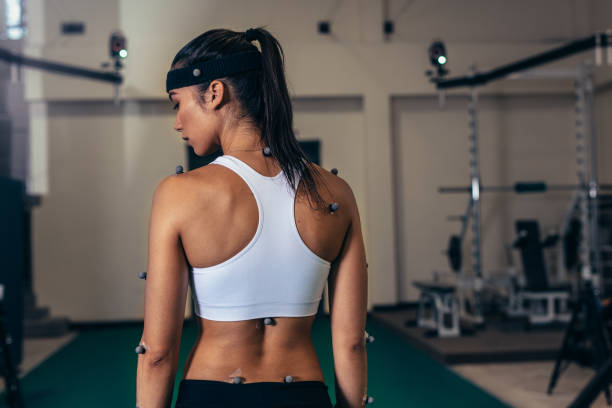
Biomechanical motion analysis is a key discipline within sports biomechanics, clinical rehabilitation, workplace ergonomics, and scientific research. Its goal is clear: to measure, interpret, and optimize the movement of the musculoskeletal system as a person, animal, or even a robot performs a specific motor activity.
In a world where data-driven decision-making is the new standard, biomechanical motion analysis has become a strategic asset for clinics, high-performance centers, universities, and research laboratories. It goes beyond simply observing how someone moves, allowing the quantification of joint angles, speeds, accelerations, activation patterns, and symmetries, transforming movement into actionable information.
Throughout this article, you will discover:
- What biomechanical motion analysis truly is
- The differences between motion capture and motion analysis
- Types of analysis applied to sports and clinical contexts
- Motion capture technologies: 2D, 3D, optical, inertial, and markerless
- Real benefits for health professionals, athletes, and researchers
If you are looking for a comprehensive, up-to-date guide on biomechanical motion analysis, you are in the right place.
What is Biomechanical Motion Analysis?
Biomechanical motion analysis is the process of capturing, measuring, and studying human movement to understand how the locomotor system functions and how to optimize its performance or recovery.
Technically, it involves:
- Recording movement through capture systems
- Biomechanical modeling of the body
- Calculating kinematic variables (position, velocity, acceleration)
- In some cases, kinetic analysis (forces and joint moments)
- Clinical or sports interpretation of the results
Thanks to current motion capture technologies, it is possible to perform a complete body assessment, obtaining accurate data on:
- Joint range of motion
- Symmetries and asymmetries
- Biomechanical compensations
- Altered motor patterns
- Functional deficits
- Efficiency of sports movements
The outcome is an objective analysis that enables:
- Correcting sports technique
- Preventing injuries
- Optimizing performance
- Designing personalized rehabilitation programs
- Improving workplace ergonomics
- Evaluating neurological and musculoskeletal disorders
In short, motion analysis turns what was once subjective into measurable, reproducible, and scientifically validated data.
Motion Capture vs. Motion Analysis
In biomechanics, motion capture (MoCap) and motion analysis are often confused. While related, they are not the same.
Motion Capture
The technique that records physical movement and translates it into a digital environment. Widely used in film, video games, 3D animation, and virtual reality, it is also crucial in rehabilitation clinics, sports biomechanics centers, research labs, and ergonomic assessments. It represents the data acquisition phase, the starting point for any rigorous motion analysis.
Motion Analysis
Motion analysis involves interpreting and applying captured data, transforming information into tangible value. It’s not just about generating 3D animations, but about converting data into clinical reports, rehabilitation protocols, sports adjustments, functional evaluations, and scientific studies.
In strategic terms, motion capture is the tool that allows obtaining the information, while motion analysis represents the final objective: the former is the means, the latter, the real impact on clinical, sports or research practice.
What types of motion analysis exist?
Biomechanical movement analysis can be applied to different fields, each with specific objectives and adapted protocols.
Análisis de movimiento deportivo
Sports analysis aims to optimise performance and prevent injuries, using specific biomechanical models to study complex technical movements in virtually any discipline. Solutions such as STT Systems have developed platforms such as Sports 3DMA, Cycling 3DMA, Running 3DMA and Golf 3DMA, which allow the analysis of cycling pedalling, the study of running technique, the evaluation of golf swings, the detection of muscle imbalances and the measurement of biomechanical efficiency.
In high-performance environments, this type of analysis translates into a clear competitive advantage: it facilitates decision-making based on accurate data and significantly reduces the margin of error in training and sports preparation.
Clinical movement analysis
Clinical analysis focuses on rehabilitation, neurological examination and musculoskeletal assessment, and is applied in cases such as stroke, spinal cord injuries, Parkinson’s disease, sports injuries, the use of prostheses and orthoses, and chronic pain. Platforms such as Clinical 3DMA and iSen allow doctors, physiotherapists, and biomechanics to quantify gait patterns, evaluate symmetries, measure progress in rehabilitation, and support therapeutic decisions with objective data.
The key value is objectivity: we move from ‘it seems to be improving’ to ‘it improves by 18% in knee flexion range’, completely transforming the clinical narrative and the way therapeutic progress is communicated.
Types of motion capture techniques
The final result of the analysis depends directly on the technology used for capture. Each system has advantages, limitations, and recommended use cases.
Let’s take a look at the main motion capture techniques.
Optical 2D motion capture with passive markers
This system uses industrial 2D video cameras and reflective markers to analyse movement in a more accessible and operational way. It is a simpler, more economical and highly portable technology, which facilitates its implementation in different contexts without major infrastructure requirements.
This system uses industrial 2D video cameras and reflective markers to analyse movement in a more accessible and operational way. It is a simpler, more economical and highly portable technology, which facilitates its implementation in different contexts without major infrastructure requirements.
Optical 3D motion capture with passive markers
This is considered the most accurate technique in optical capture. It uses infrared cameras and reflective markers to perform a three-dimensional reconstruction of movement, providing complete 3D kinematics, detailed analysis of joint angles and highly reliable data.
In addition, there are portable solutions such as EDDO, which transfer laboratory precision to real-world environments without compromising data quality. This technology is particularly suitable for scientific research, high-performance centres and advanced clinical studies where biomechanical accuracy is a strategic requirement.
Optical 3D motion capture with active markers
In this case, the markers are active LEDs that emit infrared light, and their signal is captured directly by the system’s cameras. This approach allows for greater control in identifying the markers and reduces potential interference during motion capture.
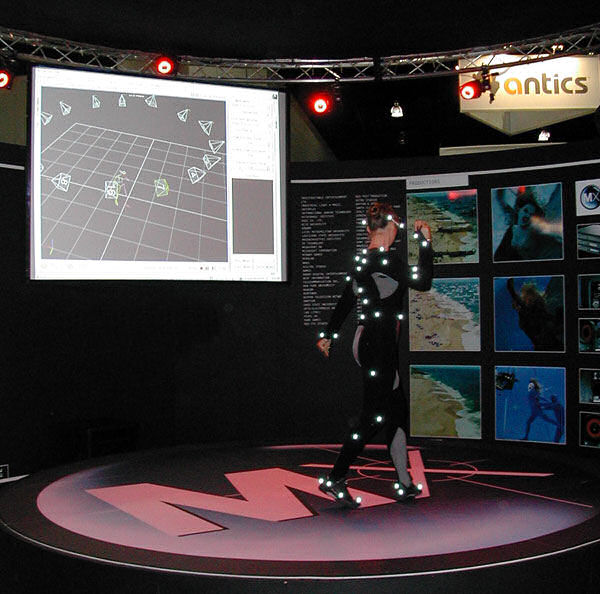
Thanks to this greater signal robustness, it is mainly used in advanced research laboratories where precision, data reliability and biomechanical traceability are absolutely critical.
Inertial 3D motion capture
Inertial capture uses IMU sensors, consisting of accelerometers, gyroscopes and magnetometers, with wireless transmission and no need for external cameras. The subject wears the sensors on different parts of the body, which send the data to a computer or receiving base for processing and biomechanical analysis.
Although its accuracy may be slightly lower than that of a 3D optical system, it offers clear competitive advantages: high portability, quick installation, the possibility of outdoor use and analysis in real environments outside the laboratory. Solutions such as iSen allow motion studies to be carried out completely independently of a fixed infrastructure, optimising resources and expanding the operational scope.
In strategic terms, it is a highly efficient, scalable technology with a very attractive return on investment for clinical, sports and research projects.
Markerless optical motion capture
Markerless capture eliminates the need for physical markers, as motion tracking is performed using computer vision algorithms, artificial intelligence, and advanced image processing. It can work in 2D or 3D, adapting to different levels of biomechanical analysis.
Its main advantages include greater user comfort, reduced preparation time, and suitability for rapid analysis and dynamic environments. However, it does have certain limitations: it is highly dependent on environmental conditions, sensitive to lighting, and its accuracy can vary depending on the system used.
In any case, this is a rapidly evolving technology with a very powerful strategic projection within the biomechanics and motion analysis ecosystem.
Benefits of biomechanical motion analysis
Implementing a motion analysis system is not just about acquiring technology. It is about incorporating a strategic tool that allows you to:
- Make data-driven decisions: Say goodbye to subjectivity. Welcome quantifiable data.
- Prevent injuries: Detect asymmetries and compensations before they become pathologies.
- Optimise performance: Small technical improvements can generate big results.
- Improve adherence to rehabilitation: Patients see their progress in real numbers.
- Differentiate your centre or laboratory: Well-applied technology positions your brand as a benchmark.
The future of motion analysis
The trend is clear:
- Greater integration with artificial intelligence
- Real-time analysis
- Optical-inertial hybrid systems
- Integration with EMG and force platforms
- Big Data applied to performance
El análisis de movimiento biomecánico no es una moda. Es una evolución natural hacia una práctica más científica, más objetiva y más eficiente.
Turn movement into results: boost your biomechanical analysis today
Biomechanical movement analysis is the perfect intersection of technology, science and practical application. Whether in sports, clinical practice, research or ergonomics, its ability to transform movement into accurate data makes it an essential tool.
The key is to understand the difference between capture and analysis, know the technologies available and choose the right system for the context. That’s what distinguishes simply using technology from truly harnessing its potential.
If you are thinking of incorporating a motion analysis system into your clinic, laboratory or sports centre, now is the time to take the plunge. Take your biomechanical assessment to the next level, turn data into strategic decisions and discover which system best suits your project. Accuracy, objectivity and a vision for the future await you.