


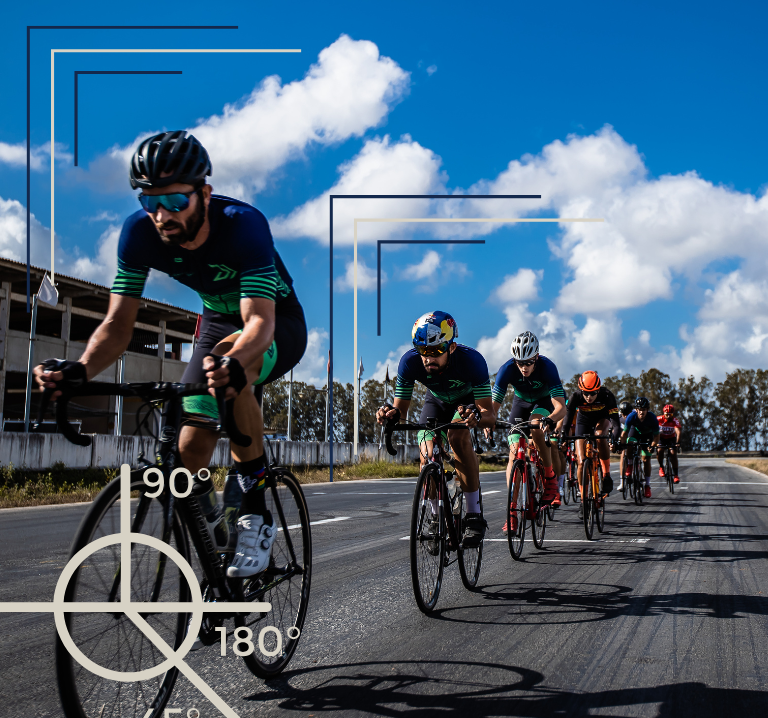
What may seem like a simple machine is actually a sum of elements that must fit perfectly with the cyclist’s body. A poor bike fit can turn a pleasant ride into a source of discomfort. That’s why understanding each part of the bike and how it interacts with your body is essential. This is where biomechanics (and the 2DMA system) come into play.
The key components of your bike
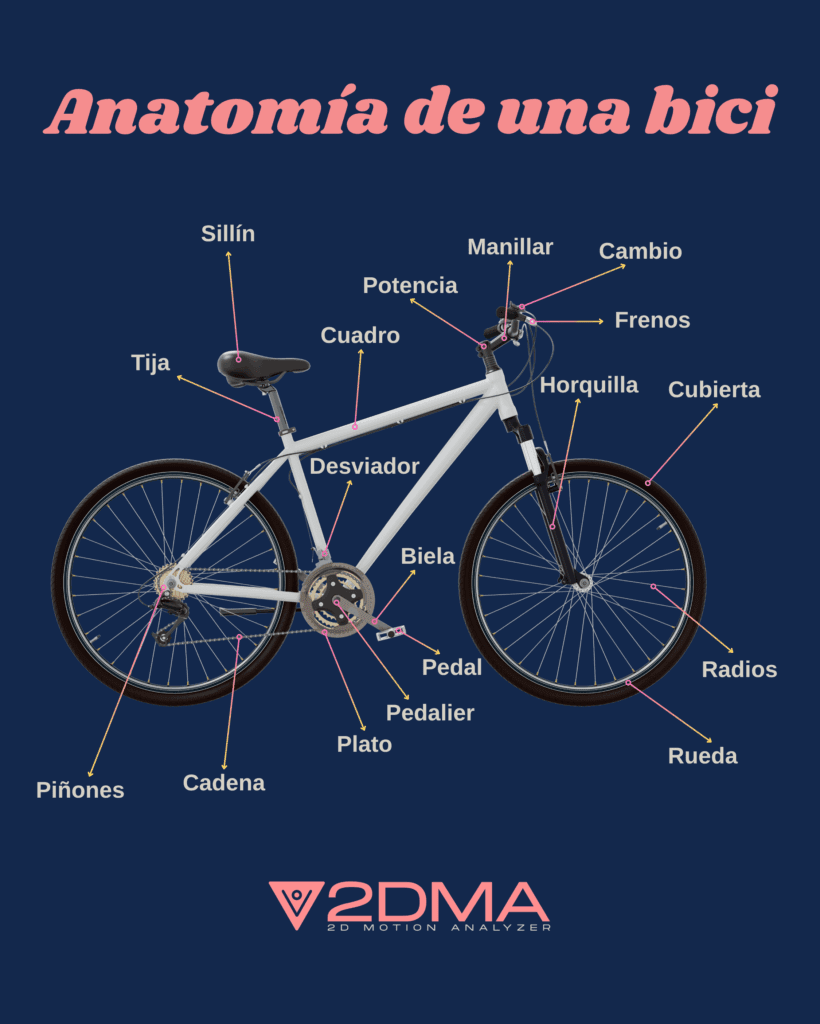
- Seatpost: It allows saddle height adjustment to match the cyclist’s morphology. A proper fit can prevent lower back or knee discomfort.
- Saddle: Comfort during a ride largely depends on this component. There are many shapes, padding levels, and widths. Choosing the right one is crucial.
- Frame: The main structure that holds all components together. Usually triangular, it can be made of aluminum, carbon, steel, or titanium. Carbon is highly valued in performance bikes for its stiffness and lightness. Its geometry directly affects rider position.
- Handlebar: Controls steering and allows the cyclist to modify posture. Its shape (flat, drop, aero) must match both the cycling discipline and the rider’s ergonomics.
- Stem: Connects the handlebar to the steerer tube. Its length and angle affect torso position, aerodynamics, and comfort.
- Derailleur system: The gear system adjusts the ratio between chainrings and cogs to ease pedaling across different terrains. It includes a front and rear derailleur, operated from the handlebar via mechanical or electronic shifters. Proper adjustment improves efficiency and protects the drivetrain.
- Brakes: Can be rim (traditional) or disc (modern and powerful). Essential for safety, especially when descending or in wet conditions.
- Fork: Connects the frame to the front wheel. Its design impacts stability, control, and shock absorption. It may be rigid or feature suspension, depending on the cycling style.
- Tires: Crucial for grip and impact absorption. Options include inner tube, tubular, or tubeless. Proper pressure improves performance.
- Spokes: Link the hub to the rim. They maintain wheel tension and alignment. Poorly adjusted spokes can cause instability.
- Wheels: Your contact point with the ground. Made up of hubs, spokes, rims, and tires. Their profile, weight, and stiffness influence speed, traction, and stability.
- Front derailleur: Enables shifting between front chainrings. It’s attached to the frame and operated by the left shifter. Proper alignment is essential for smooth gear transitions.
- Bottom bracket: The central axle that connects the crank arms. This is where pedaling force is transmitted. Its quality and stiffness affect power transfer.
- Crank arms: Connect the pedals to the bottom bracket. They transform leg force into motion. Some models integrate power meters to track performance.
- Pedals: The contact point between rider and bike. They can be flat, clipless (with cleats), or hybrid, depending on the riding style.
- Chainrings: Located in the front, there can be one, two, or three. Together with the rear cogs, they determine gear combinations. Oval chainrings exist to improve pedaling efficiency.
- Chain: Connects chainrings and cogs, transmitting pedaling force. Regular maintenance is needed to prevent wear and performance loss.
- Cassette: The rear sprockets in the drivetrain. Their tooth count affects pedaling cadence and adaptation to different gradients.
So what does this have to do with biomechanics?
An ill-fitting bike can translate into inefficiency, discomfort… or injury. That’s where 2DMA Cycling comes in, our 2D biomechanical analysis system that transforms every component of your bike into accurate data about your posture and movement.
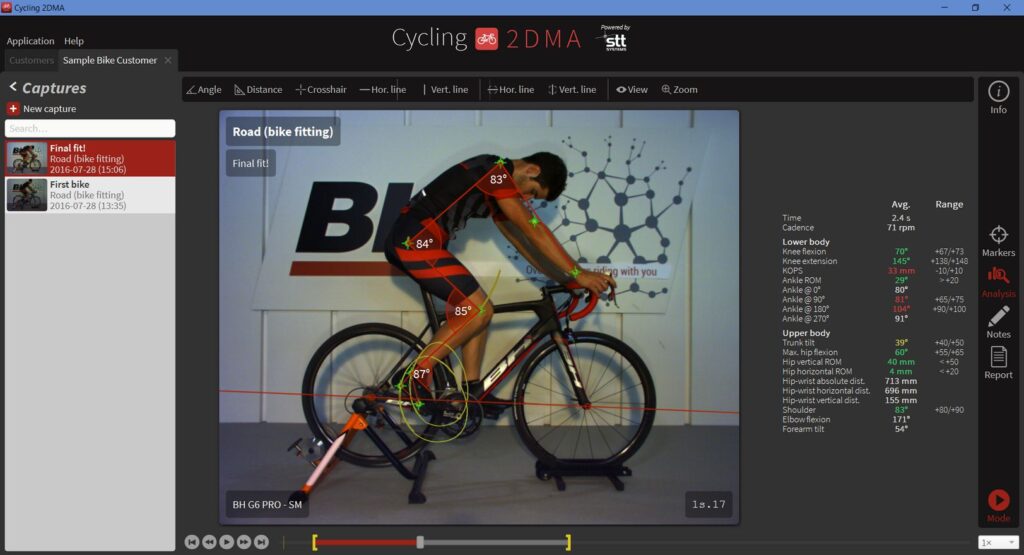
Using one or two high-speed cameras (up to 120 FPS), 2DMA analyses how your body interacts with the bike as you pedal, whether on a free or stationary roller. The system automatically detects more than 50 key parameters, such as:
- Trunk angle.
- Knee position relative to the pedal axis (KOPS).
- Ankle angle in downswing phase.
- Hip extension.
- Ankle, knee and hip alignment.
All data are compared with real reference ranges, adapted to the type of bike (road, MTB, time trial), and are complemented by automatic measurements of elements such as saddle height, setback, handlebar angle, stem length or cleat placement.
You can also compare videos, take manual measurements and generate customised reports in seconds.
A must-have tool for bike fitters, trainers or clinics looking for an objective, portable and visually stunning assessment.
What do I get with 2DMA?
After capturing the video, the software detects the markers placed on the cyclist and calculates the key angles. The system automatically compares your data with reference ranges according to the discipline (road, MTB, triathlon…) and generates a report in seconds, editable and customisable. You can also overlay videos, compare sessions and take manual measurements if you need to.
You can even enter custom data – such as the actual distance between a marker and an anatomical reference like the tibial tuberosity – to get calculations like KOPS more accurately.
And if something changes – for example, you change your saddle, change your stem or change your shoes – you can easily repeat the analysis and compare before and after.
Each bike component has a specific function, but only when tailored to your anatomy and biomechanics can you truly achieve performance, comfort, and injury prevention. 2DMA makes that fit easier, faster, and more accurate.
So next time you get on your bike, don’t see it as just a machine think of it as an extension of your body. And with 2DMA, you can make sure both work in harmony.
Turn biomechanics into your best ally for performance
Request more information about the 2DMA system and find out how to transform every analysis into an objective, accurate and professional experience.
Contact us and we’ll tell you how to start using it in your centre or practice. Your bike – and your customers – will notice!